Sunday, April 2, 2017

Life's About Reaction


There are some people in life who always are easy targets: it’s easy to make fun of them, and they know how to take it, perhaps because the teasing happens so frequently that they’ve developed a tough outer shell. For most of my life, I have been one of those people. I am affectionately teased on a daily basis by my friends, my students, and even my family.


When I was in high school, I was in the play Oliver!  where I had to speak in a British accent. Accents tend to come easy for me. I can slip right back into a New York accent and actually can talk like a munchkin from The Wizard of Oz. Yet, when I attempted the British accent in that play, for the life of me, I couldn’t get it.  I remember the director mercilessly teasing me for my “southern” British accent. Perhaps this was foreshadowing my descent to the South where I went away to college. Regardless, I was teased throughout the duration of that play.

My friends often tease me for doing too much. Yet what they don’t realize is why I do all that I do. There is a greater reason there. But this isn’t about that reason.


Most recently, I have been teased for my affinity for Eric Clapton as a musician. Yet, while many are quick to judge my musical taste, no one knows that the song “Tears in Heaven” got me through a very hard time in my life. This isn’t about that hard time, either.


I’ve been teased for being a rules follower, not liking spicy food, and for hating emojis. We are debasing our written intelligence every time we use emojis, by the way. I’ve been teased for caring too much, working too hard, and driving a minivan. Again, I have reasons for all of those things, but that’s not what this is about.


So what is this about? This isn’t about being bullied or made fun of or even affectionately teased. It’s about reaction. It’s about how you react to the situations you encounter in life.


This past week, I was reminded of this idea of reaction as a student so eloquently stated: “Life’s all about reaction. You know that. Get knocked down 9 times. Stand up 10.” His words were actually based off of a Japanese proverb: “Fall down seven times, stand up eight.”
This week I was reminded to stand up in times of adversity. And I watch all of you stand up in light of adversity as well--many on a daily basis. I’ve come to the conclusion that I don’t like the word disability. Everyone has some kind of hardship they face; some are just more obvious than others. In life, it’s how you react--how you face adversity--that truly matters.


One of the things I like most about teaching teenagers is the way you handle difficult situations. More people should take note of how you deal with things and perhaps there wouldn’t be so much stress, drama, and hardship in our lives. You see, you are some of the most optimistic people I know.  You have grit, perseverance, and a resilience that most adults I know do not possess. You don’t let your work get you down. You complete multiple assignments a week--including IAs and tests with grace under pressure. You’re expected to do community service at a whim’s notice and simultaneously earn good grades and participate in an excess of extracurricular activities--all the while spending time with your family and friends.


This month, I’ve watched you work hard at many things in my classroom:
 Seniors working on website #Calebstrong.


Juniors working on their extended essay for Theory of Knowledge at Randolph Macon College


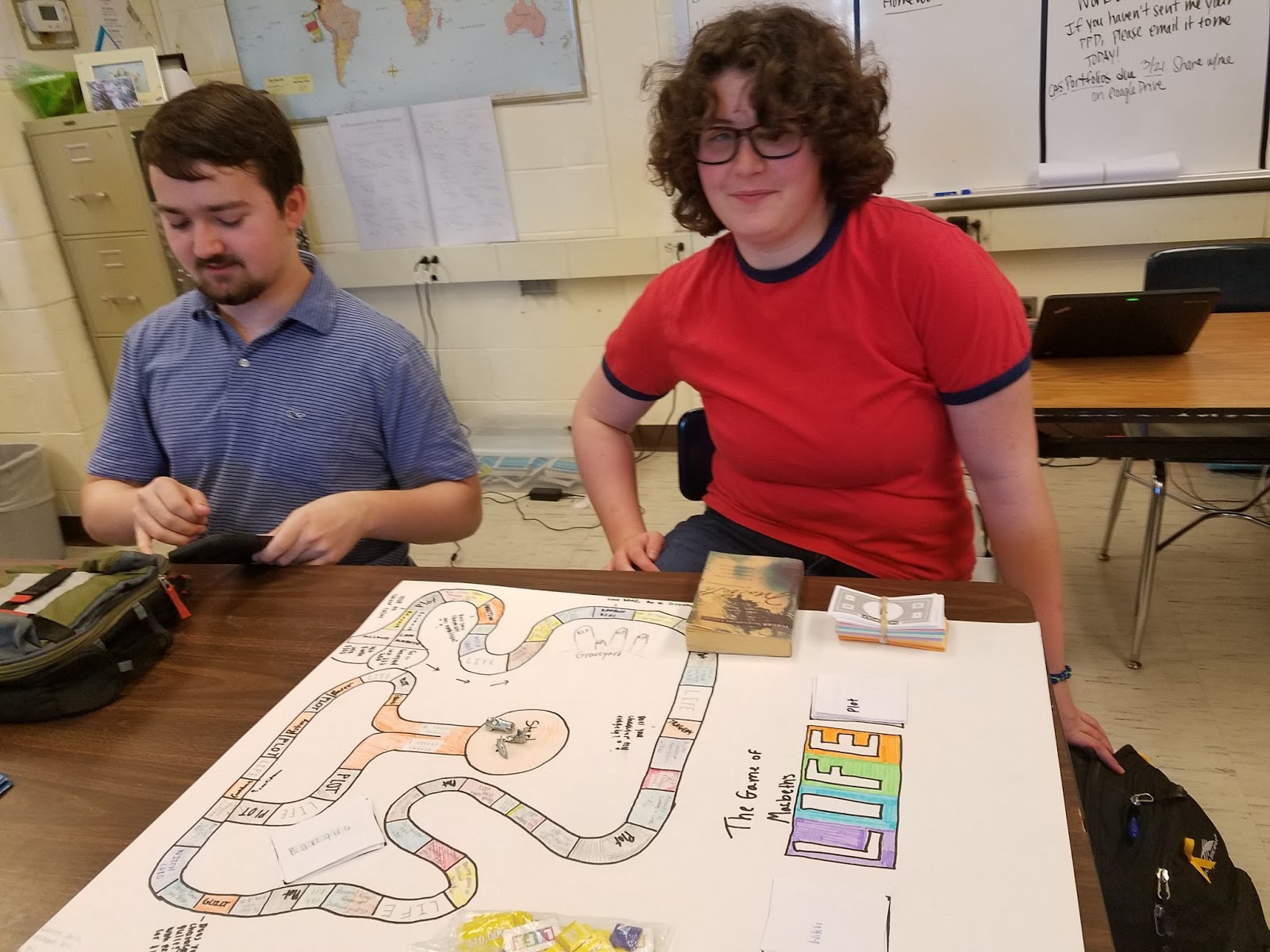
IB Junior English final projects for Macbeth. 


Ultimately, resilience is an important quality that I think many adults lose for whatever reason as they grow older. The “they’re-young-they’ll-bounce-back” persona they once had deteriorates perhaps because they’ve hardened by the world’s occurrences, perhaps because they are tired of bouncing back, or perhaps they just change as people. Regardless, it took the words of one of my students this month along with the actions of all of you for me to realize the power of perseverance in my life.

As I said earlier, I’m an easy target. I like to think I do have a tough outer shell, yet, this past week, I grew rather doubtful of that hardened exterior. What I’ve learned this week is not to worry about people’s words or actions breaking me. One small crack isn’t going to matter. It doesn’t mean I'm broken, just that I faced a tough situation and didn’t fall apart. I learned this by watching all of you continue to persevere despite the hardships you face. So, I hope I still am teased for my Eric-Clapton-loving, emoji-hating, minivan-driving, rules-following ways. I’ll still be standing no matter what, and when some big adversity comes my way, all of that teasing will have prepared me for how to react. After all, life’s about reaction.

Friday, March 24, 2017

Misunderstood: A Message for My Seniors As They Hear Back From Colleges


I am greatly misunderstood. There are very few people on this Earth who get me. People don’t understand why I don’t like cheese, why I can’t make simple decisions, why I spend so much time perfecting a lesson plan or on my teaching practice. People don’t understand why I’d rather read a book than watch the movie and why I despise conflict, emojis, and all things that bark. I’m misunderstood for my kindness. I’ve been asked, “Why are you so nice?” I’m constantly questioned about waking up at 5:30 to run and why I’m so sensitive. When I was in high school and college, I was misunderstood for my choice not to drink alcohol when all of my friends were. Yesterday, I was misunderstood when I chose Eric Clapton for the winner of my music bracket. There are strong personal reasons why, but this is not my defense on Eric Clapton. I’ll save that for another blog. I’m misunderstood on a daily basis, and I want to tell you I’m okay with that.


This week you’ll find out the last of your college acceptances/waitlists/rejections. I know from experience this week is not easy. I’ve already talked to some of you about what you’re experiencing. One of you even made me tear up when you came to talk to me. I apologize about that, by the way. I guess what I want you to know more than anything is that you might feel misunderstood if you have to face being waitlisted or rejected. It’s easy to say, “Why did she get in and I didn’t?” I know this because I have been in your shoes. I got waitlisted at William and Mary, the school I dreamed of attending, and I questioned their decision.


Are you misunderstood? Absolutely. I have no idea why colleges make the decisions that they do. Sometimes I wish I could just call them up and tell them how I’ve taught you all for four individual classes and how I’ve witnessed some of you grow from self-absorbed freshmen to caring and compassionate seniors. Or how you came into my classroom not wanting to utter a word and now I can’t get you to stop talking in a seminar. Or how much you teach me on a daily basis. Or what amazing people you are. Or how smart you are, how utterly hardworking and creative. I can't do that, and so I just try to look at any college rejection that my students face as being misunderstood.

You see, when it comes down to it, it won’t matter where you go because wherever you do end up, they are going to be lucky to have you and you are going to do great things. I know. I’ve spent four classes teaching you. That’s 360 days of educating you. Sorry...that is an awful lot of Kelly Pace.

Have you been misunderstood by some of these colleges? Absolutely. When I studied Ralph Waldo Emerson in college (one of my favorite writers because of his idealism), he wrote something that has since resonated with me: ‘To be great is to be misunderstood.” He proceeds in his essay "Self-Reliance" to list a litany of people who went on to do great things because they were misunderstood. Colleges may not understand all you have to offer them, but maybe that’s what makes you great. And wherever you do end up, whatever professors have you as their students, are extraordinarily lucky. I know. I understand. I have experienced it firsthand.

Thursday, March 16, 2017

My People

My People
Who we surround ourselves with tells a lot about who we are and what we need. I married a funny guy. He has a quick wit that never fails to make anyone laugh or at least crack a smile. He can tell a story like no one I know--you need to pay close attention because it’s one filled with so many twists, turns, and circumlocutions that I feel like I am watching The Matrix or Inception every time I listen to him. My husband is so funny that sometimes it’s hard for me to tell when he is being serious. Yet for me, most of the time, he is just what I need to balance my more serious, sensitive self. Two of my three children inherited my husband’s sense of humor. Thank goodness for the middle child who has my sensitivity and compassion. She balances our family out just a little. These people--my husband and kids--are my people. Yet today I want to tell you about a few more of the people in my life who I also affectionately label as “My People.”


I met my people when I was in my thirties. They were fourteen. They were far more immature than they are now, were clueless about literary analysis, and thought that all writing consisted of writing creatively or personal narratives. I like to think I rocked the world of my people when we started to look at literature in new ways in terms of the choices writers make, but maybe I'm giving myself too much credit there.


Like my husband, my people are funny. They have introduced me to the world of memes and make me laugh on a daily basis. They know when the joke is just enough not to step over the line, though.


My people are smart They ask insightful questions and like a good challenge. In fact, my people are at the top of their class. My people are athletes. They are the top scorers of their game. They defend. They lead.
 
Some of my people have no taste in food or music, but I let that slide. To claim that Taco Bell is real food astounds me. Yesterday I tried Taqis and lost my taste buds for a good fifteen minutes. Again, my people are confused when it comes to good taste. Some of my people also don’t see that real music’s foundation comes from the greats--the Beatles, U2, Pearl Jam. But I digress. I fight an uphill battle on this one and constantly remind myself as one student in TOK earlier this year so eloquently stated, “There’s beauty in the imperfections.”


My people are leaders. They are kind, compassionate. Their most recent accomplishment being a website made for Mrs. Hess’ nephew Caleb blew me away. Their collaboration was one of the best I have witnessed in eighteen years in the classroom. One of them even was mesmerized by the videos himself. The final product is something I am proud of--it makes me proud to be their teacher and proud that my people would do such an act of kindness without even knowing the benefactor. When Mrs. Hess called me in tears about the outcome of the final website, I realized that my people may have their flaws as all people do. They may complain about their workload and procrastinate much as of late, but when it comes down to it, they care. They are kind and compassionate people.


My people are award winners. They win DECA competitions and are accepted into countless colleges and universities. After writing close to 50 recommendation letters this year, I love hearing about where my people will be going to college or where they get into college, yet at the same time, those thoughts tug at my heartstrings--thoughts that my people are soon leaving Atlee. You see, I have known my people for four years now. I didn’t get the choice to know them; they showed up in my class as young fourteen year-olds ready to learn. And they will walk out of my classroom on June 8th perhaps having changed themselves, but certainly having changed me. When people ask me what the hardest part of being a teacher is, it’s not the papers, or the meetings, or even planning the lessons. It’s saying goodbye to my students when they graduate and wondering if they’ll ever come back. Of course, I will have new people in my classroom in September, but there will be a part of me missing my “old” people. It happens every year. So, if you find I’m struggling these last few months, it’s because I don’t know how I’m going to say goodbye to my people.


This is probably the most honest blog I can write, but I promised myself this year that no matter how vulnerable it makes me feel, I would share my writing with my students. After all, how can I call myself an English teacher--one who teaches writing--if I don’t write for an audience myself?  So, this is the honest truth: I am afraid of what my classroom will be like without my people. It’s known them for four years and grown comfortable having them sit in there and argue, debate, write, and think.

I will conquer that fear and move on, but that’s material for another blog.  For now, I leave you with this. Continue to surround yourself with the right people--people who lead, who are compassionate, people who are funny and make you feel good about yourselves. Those people will make you see the good and the humor and the compassion in others..Today and always, I am grateful for the people I choose to be around and also grateful for you. I am the teacher I am today because of you and hope you know how lucky I consider myself to have had the chance to know you as my people.

Thursday, March 2, 2017

Empowerment

When I was a junior in high school, I had the lead in the school play. We were doing a performance of Twelve Angry Women, the “sister” play to the famous Twelve Angry Men. If you’ve seen the 1957 film, I was playing Henry Fonda’s role. I was excited about this role, as I was the only juror who saw the good in the other characters for the duration of the play. I also planned to run cross country that fall. The cross country coach, however, forced me to make a decision. “You either pick the lead in the play or running,” he said. My first reaction was to ask, “Why can’t I do both?” After all, I was the kid who was involved in many extracurricular activities and never had trouble balancing my time. I ended up choosing the play because I thought, "I can run for the rest of my life, but the chances were slim that I would ever have the opportunity to play Henry Fonda’s role again." Plus, I thought there was a slight chance I would make it to Broadway (I was an idealistic 17 year-old) and this would be the first step in getting there. I think back to that decision now and realize what that coach did was empower me to make a decision. He didn’t tell me what to do; he didn’t persuade me to join his team. He told me to think about the pros and cons of both sides and really think about how they would impact my future. What I didn’t realize then is that we can’t do everything and be everything for everyone. I thought I could handle the lead and running; my coach knew that was not realistic but empowered me to make the decision.

As a teacher, I’ve learned one of the best things I can do is to empower you, my students.  I can give you a voice in my classroom. I can help you see the potential you possess--whether that be in your writing, in what you say, in the arguments you make, in the kind acts you perform. But what do you do with that empowerment? Do you empower yourself in the decisions you make? Do you take advantage of every single situation?

Here’s where I’ve seen you practice empowerment in the classroom. In IB English 11, you have been fighting for your “Fantasy Macbeth” team. Your voice has been important in arguing Shakespeare’s text as well as tackling logical fallacies in persuasion.

In Junior Theory of Knowledge you have been exploring knowledge in the arts and what that looks like. In examining whether or not art can imitate life, you created sculptures that represented your own understanding of life. Your ability to express yourself in that class is due empowerment.


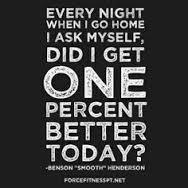
In Senior Theory of Knowledge, I taught the best lesson I have ever taught in 18 years of teaching. What you did on our One Percent Day empowered each other and me. I looked around the room as we were doing that exercise to make us one percent better, and truly was amazed. Tears welled in my eyes and still do as I think about the kindness that you bestowed upon one another and to me that day.

So what do you do now? Empower someone else. Give someone else the confidence to believe in himself. Congratulate other people on their successes; don’t just thrive on yours. Build each other up. As IB students you have so many stresses and expectations derived from other people. Instead of fending for yourself with those stresses, help one another. When my sister went to Cornell University, she arrived as a pre-med major. She quickly changed her major after she was absent from class one day. No one in the class would share their notes with her when she asked to borrow them. The environment there was so cutthroat that helping a friend who was sick and missed class was out of the question. You have the ability to empower one another by working together. Remember, you are stronger in numbers when you do that.

What else do you do? Empower yourself. Work on becoming more confident. Believe in yourself. This past month in Senior TOK, one of the seniors said something in a seminar that stuck with me: “There also are roses that grow from concrete.” I love the optimism in that statement. So, I encourage you to believe in yourself. Be that rose that grows from the concrete--that person who can blossom no matter what the environment because of hard work, determination, collaboration, confidence. Own a positive attitude. Empower yourself with confidence. And know that I never stop believing in you as my students.

So did I make the right decision in choosing the play over cross country? Well, I never made it to Broadway, but today, I am a runner. I'm not sure about what to make of that irony. What I've learned more than anything is that I may not have made the decision that led me to my ultimate career, but I was empowered to make a decision for myself. In turn, I developed a confidence in myself that I use every single day in the classroom. I didn't get that confidence from taking on the lead in the school play. I couldn't learn that confidence any faster had I chosen running. I learned it because someone thought enough to empower me to make that decision. For that, I am grateful.

Thursday, February 2, 2017

Passion from the Sidelines

Passion from the Sidelines
In the six years that I knew my father-in-law before he passed away, he spoke of how he was recruited for the Randolph Macon College basketball team when he was a senior at Douglas Freeman High School. Paul Webb, the coach of RMC, went to Freeman to recruit some basketball players. He didn’t like what he saw that day, but he did like one kid. That kid was standing on the sidelines, waving a towel in the air over his head, cheering the team on with his loud, boisterous voice. That kid was my father-in-law, Jay Pace, and was the first person to be recruited as a manager at Randolph Macon.


Each weekend, I have the opportunity to watch my own seven year-old son Jack play basketball. While I do like to watch him play, what I like more is watching him when he’s not playing. At seven, it’s hard to keep the attention of the kids when they’re not playing in the game. Most sit on the sidelines and talk or squirm in their seats. Yet, when Jack’s on the sidelines, he is always standing, cheering on his teammates. He can talk about every play in great detail after the game. Jack reminds me so much of what I envisioned my father-in-law to be like when he was recruited to manage the basketball team at Randolph Macon. Both of them have a passion--even when they are not the center of attention, even when they’re not playing the game.


This month, I want to talk to you about what it means to live passionately. I had a student ask me today why I keep coming back to Atlee day after day. What an easy question for me to answer. I return because I am passionate about what I do. I enjoy being with you on a daily basis. I am not afraid to make fun of myself when I mess up, and I know that you might be the only audience who will humor me with my Pace puns. I love seeing you grow from unsure about something to completely confident. My passion lies in watching you write and learn and think and change.


Right before he died, Steve Jobs recorded a speech where he asked, “If today was the last day of your life, would you want to do what you are about to do today?” What a great question. To me the answer is yes. It is always yes. This is what it means to live passionately. So, I thank you for the passion you exert on a regular basis in my classroom.


Juniors, you demonstrated your passion in writing original poems on issues of social injustice.

You also have just finished their first major IB assessment--the individual oral commentary. You spoke eloquently for 6-8 minutes on a Langston Hughes poem, a feat you never thought you would accomplish when I initially told you about this assessment in September. During what I deemed as "Langston Hughes Week," many of my colleagues were asking how I could listen to 58 commentaries--19 hours of listening. Yet, it’s a beautiful thing to hear your students so well versed in what you’ve taught them. Passion was there, for sure. The hard work, the hours of practice, the review games, truly paid off.


Seniors in TOK, you are about to finish the TOK course this month with your final assessment, a presentation. Teaching this course has changed me as a person and a thinker. I hope it has changed you as well. I also hope you continue to spend your last few months at Atlee High School living passionately--soaking up opportunities to be with friends, talk to your teachers, learn from one another. You have written a 4000 word essay on something you were passionate about. You have expressed daily opinions in the form of seminars, presentations, and polls. Continue to inspire those around you at Atlee by sharing your passions.

If you haven’t figured it out by now, I don’t like to be the center of attention, but I try to embrace what makes me uncomfortable--another way to live passionately. When my giant head showed up on stage during Mr. AHS last Saturday, I can assure you I was doing just that. You don’t have to be the star player to live passionately. You just have to have an idea. You have to think outside the box. You have to love what you do and have a desire to share that with others. You have to wave that towel in the air over your head or cheer for your team on the sidelines when the rest of your team isn’t paying attention. Thank you for being students who do just that.

Wednesday, January 4, 2017

Being All In

Being All In

Happy New Year! At the end of the year, I did a fair amount of reflection on my life as a teacher, a mother, and overall member of the community in which I live. I have always been reflective. Even as a small child, I would write for hours in the diary that had a small heart lock on it. So, the beginning of this year was no different for me.

As hard as it is to admit, 2016 was the year I stretched myself way too thin so much to the point that I was completely overwhelmed. I thought that if I gave myself and my time to many people and things, I would be living life the best way I possibly could. Even though I hopefully did a lot of good, I wasn’t fully present; I wasn’t “all in.” I first learned that phrase when I learned how to play cards. While I did not have the confidence to utter “I’m in,” very often and don’t find myself playing cards much these days--if at all--when I did say those words, I was taking a chance and was fully present in the round. The same holds true for life. To be present--to be all in--is one of the best gifts we can give one another.

It took the advice and compassion of one friend this fall to make me see what being “all in” really means. She listened unconditionally without judgment. She gave me her time. And in doing so, she made me realize what I was lacking in life. Through her I’ve learned that being all in doesn’t mean volunteering for every single thing. It doesn’t mean trying to be the best at what I do. It means being present in the lives of those around me as my friend was for me. Don’t get me wrong;  I’m not giving up on volunteering and helping others--our world needs more kindness, after all. I just think I will try to give my kindness in a new way with a greater presence and attention.

I invite you to consider this advice and try to live life “all in.” Your four years of high school will go by all too quickly if you let it. Don’t wish the days away. Avoid procrastination if possible. Be present in your classes--invest your time by participating in seminars, reading the books, collaborating with your peers. Be present in your school community and at home.

Here are some moments I caught you “all in” during my class this past month. TOK seniors, you  turned in your final drafts of their extended essay--an eighteen month research project. Congratulations! I have watched you from last January think of a unique topic, perform college-level research, and then write and rewrite. To say I am proud is an understatement.


TOK Juniors, get ready. This month your extended essay journey begins! This past month, I am most proud of your commitment to service. Lindsay Call, an IB junior, led a class service project for CAS (Community, Activity, Service) and donated them to a homeless shelter. The day before break, we made five no-sew fleece blankets. What a powerful example of the CAS program of your IB diploma!


As for my English 11 students, I am proud of how far you’ve come as writers. The month of December I asked you to imitate the writing style of Zora Neale Hurston’s Their Eyes Were Watching God. I received some of the best pieces of writing from you; your sentence structure, your diction--all of it has improved tenfold. You are true examples of being “all in.” We will spend the month of January getting ready for our first official IB assessment--the individual oral commentary (IOC). Take every practice opportunity I give you. Remember, you are just having a literary conversation with me for twenty minutes! As much as many of you will complain about it, I will love every minute of it; it’s one of my passions--having the opportunity to discuss literature with my students.

At the start of this new year, consider what I mentioned earlier in terms of being truly present. My resolution this new year is not to exercise more or eat better or read more books or drink more water (although none of those are bad resolutions). Rather, I resolve to play my cards with whatever hand I’m dealt in life and be fully present in that hand. 2017, I’m ready! I’m not just in; I’m all in. Are you?

Wednesday, December 7, 2016

My Mantra: How Kindness Abounds in My Classroom


My Mantra: How Kindness Abounds in My Classroom

My mom has a mantra that I shared with one of my Theory of Knowledge classes recently: It’s nice to be important but it’s more important to be nice. She said that to me as often as she could when I was growing up. She still says it when I talk to her. My own children also know the motto; all I have to do is say, “Remember, it’s nice…” and they can finish the sentence. I’ve always been a person who tried to embody what that motto states. And the past month, I have witnessed this message in the actions of you, my students.

Recently, I challenged my Theory of Knowledge juniors and seniors to bring in Thanksgiving meals for local needy Hanover families. Because these classes have a community service component to them due to CAS (Creativity, Activity, Service), my vision was that classes would contribute 10 bags (meaning that ten families would have Thanksgiving dinner). Instead, the 55 students I teach brought in 71 bags of food. Each bag had an entire meal (minus the turkey) of food for a needy family. I was amazed at the kindness, generosity, and thoughtfulness of you, my students. You put the importance of others ahead of yourselves. When I told one of my friends what you had done, she asked if I bribed you with a grade for this. No.  The only thing promised was breakfast for the winning class. Yet, I didn’t get 71 bags of food because of the free breakfast or because the seniors wanted to beat the juniors; I had 71 bags of food on the floor of my classroom because you understand kindness. For that, I am grateful.


My gratitude extends to my English classes as well. I recently finished grading your first analytical paper. If there’s one thing I love teaching--probably more than anything else--it’s teaching writing. I read in writer’s memos about how you struggled with writing this paper. Some of you feel like your writing is changing and developing. Many of you asked me questions as you are revising your work. As a teacher, nothing is more satisfying than watching students learn, and I am grateful every day I have the opportunity to witness this growth. I have seen students who struggled to write well as ninth graders construct beautiful sentences this year. I have heard students speak up in Socratic seminars who never would have done that freshman year when I was your teacher. I have witnessed your creativity recently as you made memes inspired by Their Eyes Were Watching God.
I am grateful every day I get the chance to watch you learn.  I hope you will see your writing continue to grow and develop over the course of the year. Writing is a process. If you don’t feel like you’re there yet, please don’t worry. We will get there.

So I encourage you to continue to learn, to value your education and what your teachers have to offer. Don’t be so quick to complain about what you are learning because somewhere at Atlee there’s a teacher you can find in Room 211 who doesn’t want to feel important. Instead, she wants to exhibit kindness in teaching you what you need to help you develop skills for college and the future.