Saturday, January 20, 2018

Magic: The Art of Practice and Being a Cheerleader

      In our second snowcation of the month of January, my kids treated me to a magic show. Honestly, the only magical thing about the show was that all three kids were playing together and getting along. The show began with Jack pulling six things out of his top hat including a quarter and a glue stick. Pure "magic." Then my girls held playing cards upside down on their fingers. When I asked how they did that, I was told, "A magician never reveals her tricks." And then Jack made Katie disappear. Here is an excerpt of that moment:

Jack: And now I will make Katie disappear. (He waves his magic wand in the air over Katie's head. Katie "magically" diappears).

Me: How do you bring her back?

Jack: We haven't practiced that part yet.


     I laughed at that moment as a few minutes later Katie emerged from the closet. As enjoyable as the magic show was, I learned two things from that moment: 1) practice is an important part of what we do in life and 2) everyone needs a cheerleader.

     I grew up under the motto, "Practice makes perfect." Anything I've ever done in life where I've been successful has been because of practice (and maybe a little bit of magic). About a year ago, I had to give a speech in front of a room of around 300 people. I was petrified. For those of you who know me well, I hate the spotlight that public speaking brings. So, I practiced. I read over that speech every day daily until one day I was driving in the car by myself and all of the words of that speech were in my head. Somehow, I had memorized the entire ten minute speech. On the evening I was to give that speech, I delivered it with much more confidence than I anticipated. I still did not love the spotlight, but I did it. Just like how Jack couldn't make Katie magically reappear because they hadn't practiced that part, I don't think I could have delivered that speech without practice.

     Juniors in Room 211, we've been practicing since September. At the start of the school year, some of you told me you never would be able to speak about a poem for eight minutes for your Individual Oral Commentary (IOC). And you couldn't. This assessment is hard. I know because I had a class several years ago challenge me to deliver a commentary in front of the entire class. I said "um" 14 times. They counted. I needed practice. WE have practiced. Every time I asked you to speak in a Socratic seminar, we were practicing. Every time you timed your partner delivering a commentary, we were practicing. Every time we answered questions about literature, we practiced. We even played musical chairs to practice. So many of you went from speaking for less than a minute to being able to deliver a full six to eight minute commentary. How? It has nothing to do with magic. It was all practice.
Sometimes we took a break in our "practice."


     Seniors, you've been practicing as well. Since September of junior year when I introduced you to the idea of what a knowledge question is, you've been practicing how to write good ones. You've mastered what a REAL life situation is as well as how to write these knowledge questions without necessarily beginning with "to what extent."

     Both groups are ready for your IB assessments. Juniors, you are ready to give your IOC next week. Seniors, you are ready to write your prescribed title in Theory of Knowledge. And I am ready to be your cheerleader.

     When my kids performed their magic show last week, I realized how much the success of their show depended on my enthusiasm and engagement. So, I asked questions. I marveled when Jack pulled a glue stick out of his hat. I was in awe when Katie "magically" disappeared (even though I knew she had just went into the closet). I was their cheerleader and greatest champion.

     I never was a cheerleader in high school. Actually, we didn't even have a cheering team. I think this picture of me at age 4 is probably the only moment I dressed as a cheerleader. Yet, I find myself a cheerleader on a regular basis, especially when it comes to my own children and my students.

Last year, my principal, Dr. John Wheeler, showed us a video clip of Rita Pierson at a faculty meeting. This is one video that changed my teaching. Ms. Pierson argued that every child needs a champion. Here is an excerpt of her words that really moved me:Image result for every child needs someone who is crazy about them

I realized from her motivational speech that I have the power to change not only minds by teaching content but the ability to change mindsets. Some of the most nervous students last year became my greatest challenges and my greatest successes. My juniors and seniors I currently teach, I want you to know I am your champion. I am your greatest cheerleader. Over the next week and a half, I will be out of the classroom for six days to hear individual oral commentaries. Many of my colleagues have told me how awful that must be to have twenty minute conversations with every single student (77 of you this year). This year I will spend 1,540 minutes listening to commentaries. That's over 25 hours of listening. That's over a day of listening. Yes, it's a lot of listening. Yet to me, it is magical. When else as an English teacher do you have the opportunity to talk to every student individually about literature? There's no better moment in my teaching when someone comes in to do his commentary, and he is brilliant, and I get to cheer him on as he goes.

     So, as you begin your assessments--your IOC and prescribed titles--let me be your champion. You've done all of the practice you can. Don't tell me you can't do this. Don't tell me you don't want to (I know no one really wants to complete an IB assessment). Instead, remember the cheerleader who is in your corner, excited to see your every move. Remember you deserve someone in your corner.

     Next year, you will come into Room 211 as so many of the seniors have and will tell my current juniors the commentary is not that bad. And when someone next year hears your commentary as I am demonstrating what a good commentary sounds like and asks, "How did they do that? There's no way I can speak for 8 minutes on a poem." I will simply smile and reply, "A magician never reveals her tricks."

Good luck, my students. Remember you've got a champion in me listening to you speak and reading your words. I'm excited to sit back and watch the magic.

Monday, January 1, 2018

Having Resolution--My New Year's Resolution

Having Resolution--My New Year's Resolution

     I recently taught my favorite but perhaps the most underrated and undervalued punctuation mark--the dash--to my IB juniors. I'm seeing that dash creep into their writing more and more--and I love it! I joke with my students that Parenthetical Dash would be my band name if I ever quit my day job and formed my own band. For those of you truly curious about this, I have not a single musical bone in my body, but a girl can dream. My students have learned that the dash--if used appropriately--can add personality and voice to any piece of writing. Yet, this punctuation mark also has become slightly metaphorical for me. Allow me to explain.

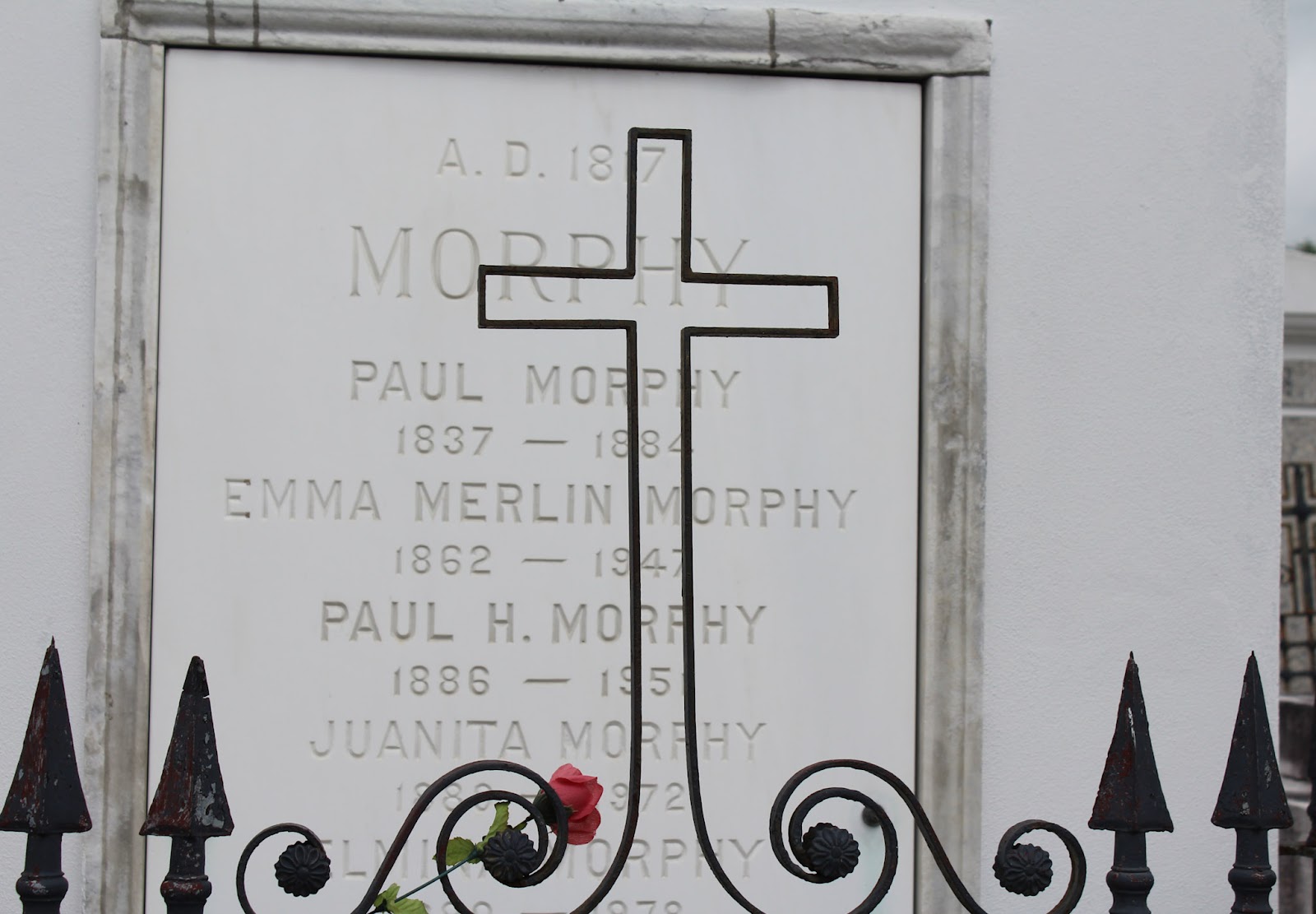
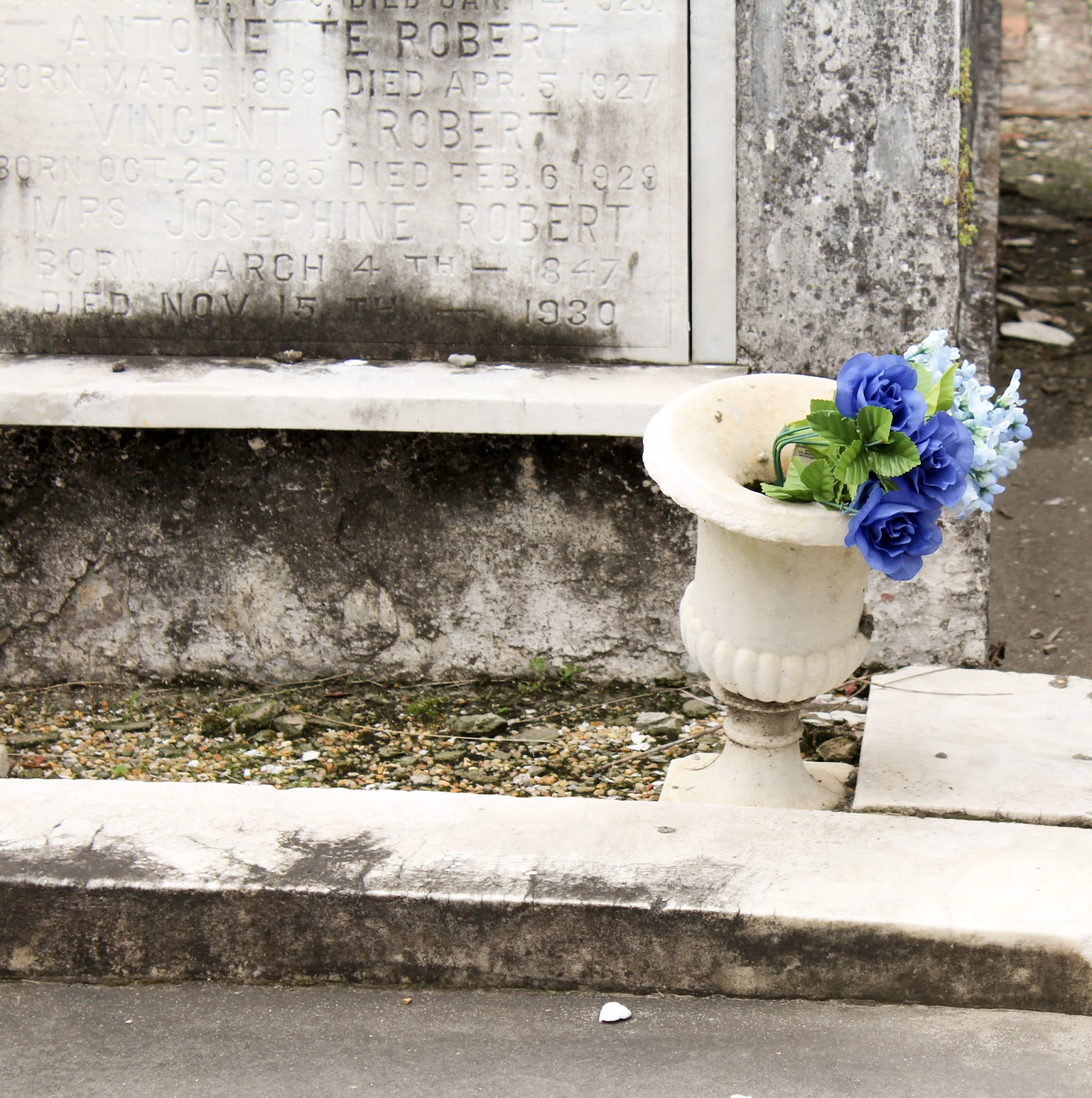
     Almost two years ago, I found myself in a famous cemetery in New Orleans, Louisiana. I was supposed to be taking pictures in a street photography course (and I did as evidenced below), but my mind began to wander as I considered the people buried in the famous cemetery.
33-IMG_0569.jpg 32-IMG_0568.jpg

Tombstones are fascinating to me, as they can tell a lot about a person by the names, the epitaph, and the dates they lived. Forgetting my task of photographing the cemetery entirely, I started to make up stories in my head about the people etched on the tombstones--because what else would an English teacher do in a cemetery? And I began to think about the fact that those two dates on the tombstone--the date of birth and death--are not really important. Rather, it’s the dash in between that matters. That small dash represents our life and all that we did, all that we said, all the people we impacted, those we hurt. What we choose to do with that dash is up to us.
     
This moment of how we live that dash reminds me of one of my students I taught. The biggest lesson this student has taught me is how to live that dash in moments of determination and resolution.

     At the end of the year, my students are required to deliver a ten minute literary presentation as part of their IB assessment. Oral presentations were not this student's idea of "fun" in my class. While we practiced throughout the year, I knew that he would not be comfortable in front of the class for ten minutes. I understood this discomfort because I despise public speaking, myself. As he stood at the podium, he somehow couldn't find the words to begin. I asked him to step outside, and I followed him into the hallway. He sat on the floor as tears welled in his eyes, telling me that he couldn't give his presentation. I quietly began to reaffirm the idea that he could, in fact, give this presentation, yet he wasn't buying in to what I was saying. Finally, I looked at him and got serious. "Do you know the secret to giving an oral presentation?" I asked him. This seemed a bit hypocritical considering my own fear of public speaking, but I knew I had to find a way to get him to give his presentation. He looked up at me. "You just have to know your first line," I said. "Do you know your first line?" The boy slowly nodded his head and uttered the first line of his presentation. "Good. Now I want you to say that line over and over again because if you can remember the first line, you can remember the next line and the line after that and the one after that. I promise you they'll come to you." I left him out in the hallway for a little longer to practice that first line. 

     When he was ready, he came into the classroom and stood behind the podium. Before he could utter his first line, there was a reaffirmation from someone on the side of the room, "You got this." Another came: "You can do it." I loved the spontaneous positive reinformcement his peers were giving him, but I feared he would forget his first line. But he didn't. He said that line and many more afterwards. The class gave him the biggest round of applause when he was finished. I sat at my desk, unable to grade the presentation because I had goosebumps. I had witnessed something so incredibly amazing--not only did I see kindness among my students, but I saw a student face his fear and succeed. I grabbed onto his arm as he rushed out the door. I've come to notice that everyone is always so slow to enter my room and so quick to leave, but I knew this student wasn't getting out of my classroom without me saying something. "I'm proud of you," I said. He looked at me and smiled. It was the biggest I had seen him smile that year. When this student unexpectedly passed away, his death paralyzed me and changed me as a teacher, and this story keeps coming back to the forefront of my mind as one that has made one of the largest impacts on me in my career.

      I don't usually tell stories about individual students in my blog, but I tell this story because I have learned so much about resolution from this one particular student. What does it mean to have resolution? I generally avoid dictionary definitions and suggest my students do the same in their own writing, but I would be remiss if I didn't define the word. According to Webster's Dictionary, resolution is "firmness of purpose; a mental state of determination." This student showed me and the other twenty something students in my classroom that day what it means to have resolution. He showed us what it means to be determined; he showed us what it means to live the dash.

     In a similar manner, I'm inspired by my current students who find ways of determination and resolution in living that dash. Senior TOK students, you have turned in your final drafts of your extended essay--an eighteen month research project. Congratulations! I have watched you from last January think of a unique topic, perform college-level research, and then write and rewrite. To say I am proud is an understatement.

Junior TOK students, you spent the day before break collecting clothes for Shepherd's Way Shelter and making no sew blankets. Your sense of giving and generosity is inspiring.


IB English juniors, you have shown me resolution as you prepare for your Individual Oral Commentary at the end of this month. You have gone from speaking for 49 seconds back in September to now delivering five to eight minute commentaries. I am in awe at your perseverance and determination to succeed.

So, as we begin 2018, I ask you to think about the dash in your life--those moments and what you choose to do with them. I ask you to think about how you can live a life of resolution. How can you show determination despite the fact that you are scared or don't really know how to make sense of your dash? In life, you can make a wish or you can make things happen. My resolution this new year is to make things happen, to live a life with resolution--with the kind of determintation and purpose that will make the dash in my life truly matter. What that means is I am committed to the things and people I believe in but also am committed to those things that scare me. It means I put down my phone or my book or my work and make time for others. It means when my son asks me to play Emoji Uno (yes, there is such a miserable game) for the ninteenth time, I play another round. It means that I start writing the book I have always wanted to write or try the lesson plan I had been afraid would not work. It means no matter what, I say yes to new experiences, new ideas. "No" cannot be an answer nor can "I can't" when I most certainly can.

Perhaps a year from now you will be listening to me sing in my band, the Parenthetical Dash. I will turn my monthly blog writing into the drafting of song lyrics. While I highly doubt this will be the case, this year I'm pursuing a life laced in resolution--and of course, a girl can always dream. Happy New Year, my students and readers!


Wednesday, December 6, 2017

College Edition: Just A Number

     I found myself reflecting on calculus recently when one of you told me that class was going to put a big dent in your GPA. Now me thinking about math is a scary thought, especially calculus. This was a class I took over two semesters in college because my professor thought that it would "better suit me to take it that way." Translation: You're not smart enough to handle it in one semester. Let's break it up over two. My response in hindsight: How lucky am I? For, calculus made an English major out of me, and helped me to appreciate every single paper I wrote in college. I simply was not made for derrivatives. And, quite frankly, derivatives were not made for me. Give me the trochaic rhythm of a poem or character archetypes or even a conjunctive adverb any day, though, and I felt right at home. But I digress. Simply put, calculus was my nemesis in college. It put a dent in my GPA. I worked for every single grade I earned those two semesters, went to extra help session upon extra help session, but the numbers still didn't work out--on my exams and in my GPA.

     Yet, I know now that it's just a number. My GPA--not a 4.0 for the first time in my life--was just a number. The score on most of my calculus exams--far lower than a highway speed limit--was just a number. And numbers don't define us. We matter far more than any test score. Let me repeat that: We matter more than any test score. At the time, I didn't realize this. I went home that first semester from college with my laundry, probably a few extra pounds because the dining hall at the University of Richmond was pretty good, a GPA that was lower than what I was used to, and a destroyed pride for not getting straight A's for the first time in my 13-year academic career.

     I remember telling my parents about college--about how I held my own in the poetry seminar I was enrolled in that semester where I was the lone freshman among upperclassmen. I remember telling them about the people I had met when just a few short months ago I had been dropped off in a place of 3000 students knowing not a soul. I remember telling them about the volunteer work I was doing in a program called Carver Promise. I went each week to Carver Elementary School in the City of Richmond and mentored a second grader named Rashad. Rashad is probably around 30 years old now, and I still have the letter he wrote Santa that year:

It took a long time for me to help him compose that letter, and it was, by far, the most gratifying thing I had done that semester at college. For the first time in a long time, I volunteered not because it would look good on a resume or application, not because my parents persuaded me it was a good idea, but because I wanted to volunteer. I wanted to make someone else's life better. And it felt good to be a part of this organization. I certainly was more than just a number.

     So, my first reaction when one of you was telling me about the hardships of calculus was that number doesn't define you. Ironically, the next day at school, we had a guest speaker in an assembly at Atlee who said the very same thing: "You are worth more than a test grade." I smiled at the thought. Here this 24 year-old probably was getting paid a far greater salary than I do to give advice to teenagers about their lives, and I (closer to twice this young man's age) gave someone the same advice for free. And again, I reminded myself, that I am not just a number. My salary does not define my self worth any more than my calculus score defined me. That semester, my calculus grade did not prevent me from anything in life except maybe sleep. Today, my salary does not prevent me from anything in life except maybe a trip to Hawaii and retirement in my near future. Yet, I'm okay with that because a number does not define me. I am not just a number.

       So, as you sit down to study for your exams after your first semester from college or if you're reading this and are a student who is more seasoned in taking college exams, or if you are one of my current students reading this who is stressed by the inordinate amount of work you have to do before break, please know that while grades are important, they are not everything. Numbers don't define who you are. After all, they're just numbers. Calculus is just numbers. And numbers can't be used to describe and define you, but words--words can. And so my choice to be an English teacher is finally validated twenty years later in that idea that numbers don't define us, but words most certainly do.

     Good luck on your upcoming exams! Congratulations on finishing your first semester at college. I know that you're busy, but please come back and visit me in Room 211. It's missed you...and so have I.


Thursday, November 30, 2017

Moving Towards the Fire

    You cannot be more loyal to your fears than you are to your futures.

That line is still resonating with me. I heard it at the NCTE conference last week from author Brendan Kiely, when he was discussing his novel he co-authored with Jason Reynolds, All American Boys. I wrote it down immediately, almost as if I knew a blog would resurrect from the line. And somehow it did.

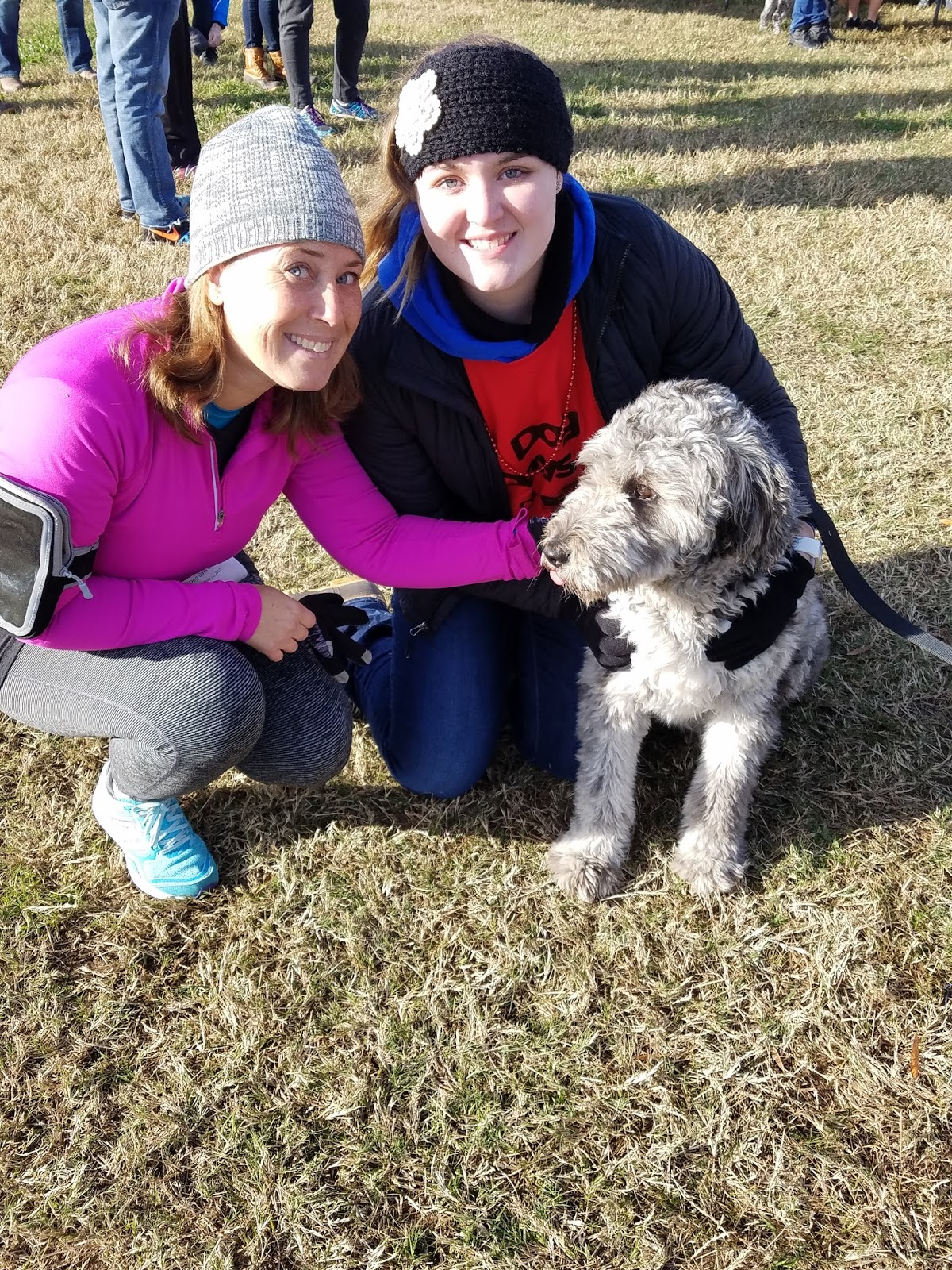
    I think about the fears I have had in my life. Some are fears I no longer experience like watching Michael Jackson's "Thriller" music video when I was a kid and calculus class (Sorry, math teachers. Calculus never clicked with me. It was one of those classes that made me appreciate every paper I wrote in college as an English major, though). Other fears still exist: spiders. (There's irony there considering I am a UR graduate). I fear emojis will make us stop talking entirely and that I will disappoint the people important to me. Every time I hit the "publish" button on this blog, I am afraid--afraid that my words aren't good enough or that no one will read them. I fear dogs (I'm working on that one thanks to the dog walk sponsored by Atlee DECA and Emerging Leaders where I was able to pet over a dozen dogs).

My adult fears also consist of the Dorito shell at Taco Bell, my cell phone taking over my life, and raising kids in today's world. Bigotry, bullying, and racism never being eradicated truly frighten me as well.

     Yet, we can't survive by standing outside of what we fear. We need to move towards the fire. We have to take risks. We have to face what we are most afraid of in life. I'd like to be able to tell you that I did take the Dorito shell at Taco Bell head on and that it wasn't so bad. I'd love to be able to write that somehow I no longer care what other people think, that I don't care if I disappoint others. Yet, these fears are real in my life, extentions of who I am as a person. So what do I do? I start to move towards the fire. I've learned it's okay to be uncomfortable in situations. Sometimes it's better  not to do what is easiest but what feels right even if that is unsettling or fearful.

     This idea really resonated with me about twenty years ago when I was searching for my first teaching job. The summer after I graduated college, I had been on thirteen interviews. Somehow at each interview, I just didn't "fit the part." Frustrated, as it was now one week before school was to begin, I called the director of Human Resources in Henrico County. I had been told to regularly check in with the Human Resources Department so they would know my name. They knew my name. "Ms. Nagle," the director of Human Resources said, "I told you if I had a job for you, I would call you." She seemed exasperated by my call. And I made a choice in that moment. I could have said thank you and hung up the phone, but something told me not to do that. So, this shy, nonconfrontational want-to-be teacher did something brave and completely out of character.

     "I don't think you understand," I said. "This is not a 5 year commitment or something I will leave in the near future. Actually, this is not a job to me; it's a lifetime profession. More than anything in life, I really want to teach."  My hands were shaking and so was my voice. The speech was far from eloquent like that of Atticus Finch when he defended Tom Robinson on the stand in To Kill a Mockingbird, but it was sincere and honest and brave. She curtly said she understood and hung up the phone. About ten minutes later, I received a phone call from Human Resources. They had set up another interview for me. That next day, I landed my first teaching job. I put my future far ahead of my fears that day, and it changed my future and more importantly, my outlook on life.

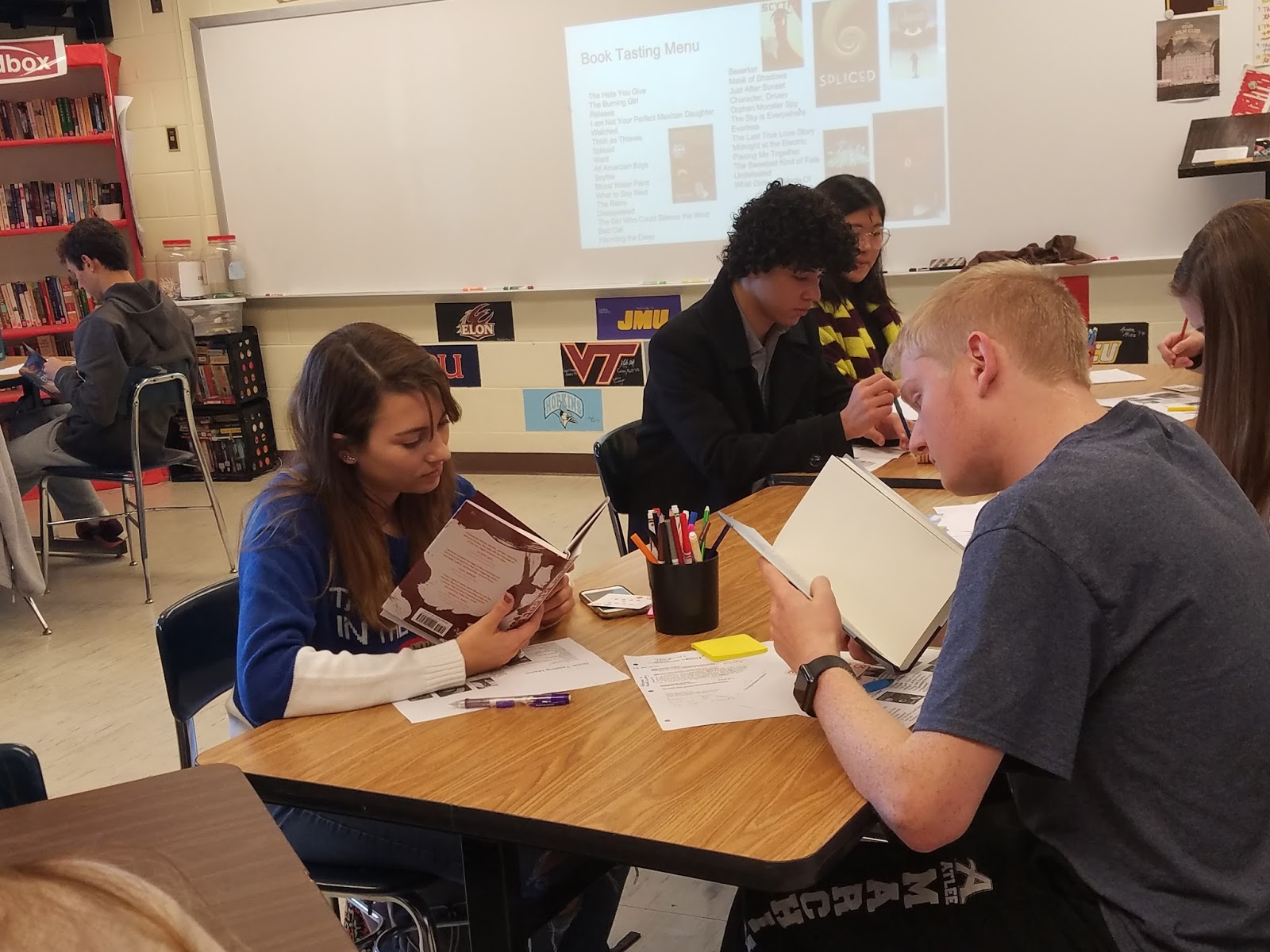
     I think about what life would have been like had I not said what I did. Would I have given up on finding a teaching job? Think about all of the things I would have missed out on if that happened. I wouldn't have seen you sample 30 new books at our Book Tasting and respond to one another in reading those books.


I witness you stand your ground on a daily basis. To think of all of the intense moments I would have missed out on in my classroom.
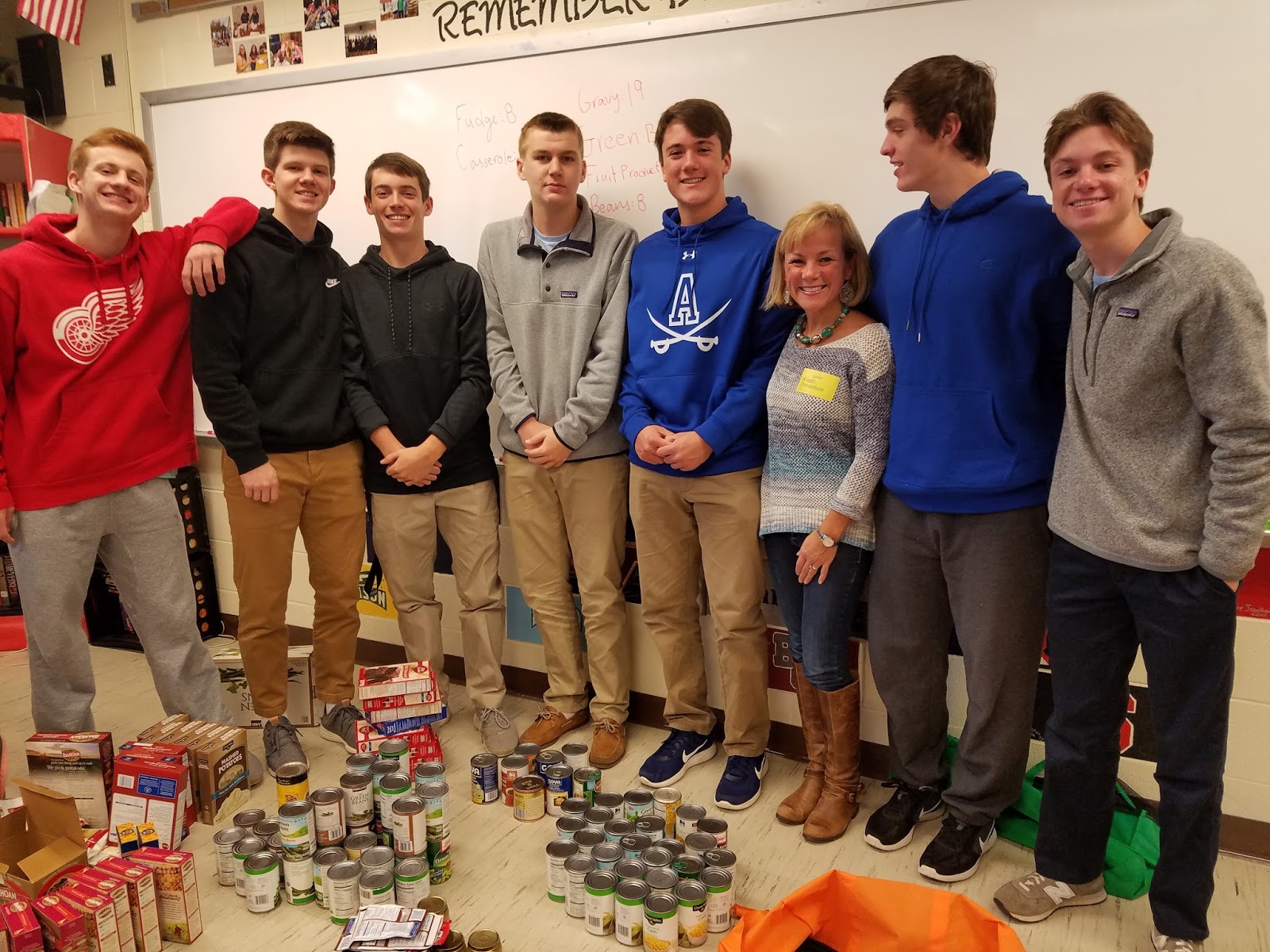
One of the best things I witnessed this past month happened in my TOK classes, where you never shy away from making a difference; you collectively brought in 500 cans to feed the hungry this Thanksgiving.


While these might not encompass your fears, they demonstrate the idea of moving towards the fire, of living life in a way that matters. And to think I would have bypassed all of it had I not advocated for myself in that phone call twenty years ago. To think what would have happened had the director of Human Resources not known my name.

      In the country music song "Standing Outside the Fire," Garth Brooks croons, "Life is not tried; it is merely survived if you're standing outside the fire." Somehow that song lyric keeps popping into my head as I write this blog. So this is my challenge to you this month. Find one thing you are afraid of, and look that fear in the eye. Figure out a way of moving towards the fire. Do not let your fears control who you are. Find the words to be brave. And know if you're looking for me this month, I may not be working on conquering that Dorito shell yet, but I will take the first step at grappling with my fears as I move towards the fire and hit the "publish" button on this blog.


Monday, November 20, 2017

Gratitude: Lessons from My Roll-top Desk

I have an old desk in my house with lots of compartments. It is one of those old-fashioned roll-top desks that has all sorts of places for mail and paperclips and pens. When I first married my husband, he brought this piece of furniture into our marriage. I didn't want it; it had chipped paint, looked its age, and didn't really fit with any of our decor. Yet, it was his grandmother's desk. So, it stayed and now serves as a metaphor for my life--how I tend to compartmentalize everything. Everything in my life has a place, a time; each hour is marked with barely a moment to relax. What kind of life is that? you may ask. A life that is filled. A life of gratitude. I am grateful for my life--this crazy life where some days I race in circles, forgetting to defrost the chicken I want to make for dinner and copy the poem I want to teach but one that is filled with people and emotions and splendor.


I am grateful.


I am grateful I am a mother despite the fact that sometimes I feel like I am an unpaid uber driver for my kids. I take them places--so many places--dance rehearsal, gymnastics, baseball practice, friend’s houses, to Taco Bell (very unwillingly and forever putting up a fight, I might add), to the movies and the library. Yet I am grateful. For every minute I spend with my kids in the car, I’m able to talk to them and listen to their music and glance at them growing up so quickly from the rearview mirror. Just as objects in the rearview mirror might appear closer than they seem, my uber driving brings us closer together.


I am grateful.


I am grateful I am a runner. I run to be alone and hear myself think. I listen to Michael Jackson or the Beatles or sometimes even something mellow like the Eagles or Coldplay. Every step is one closer to mental clarity. Some of my best lesson plans have been developed while I was pounding the pavement at 5:30 a.m. and so have I attempted to solve the problems of the world. I thought of my 1% better idea on a run. Most of my blogs were written in my head as I near mile 3 or 4 of a longer run.  I am grateful--grateful for my sturdy legs and persistence and the time to fill my lungs with air and think.


I am grateful.


I am grateful I am a reader. I get lost in a good book, so lost that I sometimes forget it is past midnight on a school night. In a really good book, the characters become real people to me to the point that I dread having to say goodbye. The same feeling I experience every year when another class graduates.


I am grateful.


I am grateful I am a writer. I’m grateful words come easily to me (most of the time)...grateful that I have a medium to write them, to put them together, to use them to help others see that they matter or are important.


I am grateful.

I am grateful I am a listener. I may not be the best teacher, but people know I can listen. And I do. Always. At 2:43 in the morning or at 5 in the afternoon over a cup of hot tea, I listen to the words of a friend.

I am grateful.

I am grateful I am a laugher. I laugh every day even on the bad days. This weekend in St. Louis we called an Uber to take us to a restaurant for dinner. We stood on a street corner across from our hotel, waiting for the Uber driver to navigate his way to us. He finally did after more minutes than we wanted to wait. By the time the driver showed up, we were impatient, frustrated, and hungry. We got in the car, and somehow, without us even knowing, this restaurant was literally around the corner. I laughed. We ubered (if that is a verb) around the corner. Yet, I am grateful for that moment and all the small moments in my life that might seem idiotic or frutrating but also are ones that give me a chance to laugh.


I am grateful….for my roles in life. For the fact that of all of the compartments intersect somehow in gratitude. Yet there is one role I have not mentioned that I have been in for twenty years.
I am a teacher. I shuffle papers back and forth. I read college essays. I talk to kids about the frustrations in their lives. I try to make sense of a teenager’s language. Honestly, I don’t understand it all. Emojis are foreign to me as is texting language like ttyl and smh. Yet, I am grateful for every day I spend in the classroom. I am grateful to teach with the colleagues I do, whose creativity, compassion, and sense of humor inspire me so much on a daily basis. This year, I have the opportunity to collaborate in my TOK class, something I have been wanting to do for years. I am so grateful for this collaboration I get to do on a regular basis.

And I am grateful for you. My students. You are bright and funny and utterly creative. You think outside of the box, and you are not afraid to tell me how you really feel. You’re honest and truthful and inclusive. You may forget to capitalize the letter “I” and your love of memes far outweighs your love of books, but still I am grateful. I am grateful to spend 90 minutes with you every other day. I am grateful for every moment you make me laugh and even the ones that bring me to tears.


I am grateful.


I am grateful that as I close the lid to cover my roll top desk, my life has so many intricacies, so many compartments, so many roles.

I will always be grateful.

Saturday, November 4, 2017

#AtleeStrong: Hug Harder. Live Kinder

     When I coached track at Godwin High School many years ago, the other head coach I worked with used to give out "happy hugs." Whenever a kid on our team was down or frustrated or annoyed, he would look them in the eye and ask, "Do you need a happy hug?" The kid would inevitably roll his eyes, as a smile crept into the corners of his mouth. A hug was never exchanged, but the idea of one simply transformed a bad attitude.

      I am a hugger. I always have been affectionate in that way. I imagine a good hug--one that lasts longer than a second and does not feel obligatory--is similar to the way other people feel about handshakes. A firm handshake conveys confidence and someone who is certain of the world around him. A strong hug demonstrates kindness, compassion, and is a way to show people they matter. This past week, I've given out a lot of hugs. Some were tight embraces where the other person didn't want to let go. So I kept holding on until they did. Some were awkward, as I am much shorter than most people and had to stand on my tiptoes. Some were given because I didn't know what to say. A hug just seemed like the right thing at the moment. One young man turned to his mom after I hugged him and said, "She knows how to give a good hug!" Yes, I'm good for something. I promise. Each  hug was my way of saying to others that they mattered. Yet, each hug also told me that I mattered.

     We don't take enough time out of our day to tell other people this. For most of my teaching career, I know I didn't tell the students sitting in front of me those words. I thought I showed them that through my passion for teaching or my desire to listen to what was going on in their world, but how many times have I honestly sat down and told someone in my life they matter to me? How many times have I told them they were important? While I may think as a teacher I am showing this to my students through my actions, I don't think I always have had the courage to say those two words: YOU MATTER.

    It can be nervewracking to tell someone they matter to you. What if you look foolish? What if they laugh? What if they are not ready to be serious at that moment? What if they don't feel the same way about you? So imagine what it is like to tell 30 students they matter. Last year was the first year I recall saying those specific words; afterwards, my class embraced me with a very claustrophobic group hug, yet it changed things between me and my students for the better.

     Quite often I find it is easier to talk about someone else than to speak directly to them. Our world is becoming more and more about screen time--communicating with others through texts and tweets instead of face to face contact. No hug can be conveyed through a text message, though. Even a hug emoji doesn't provide the same feeling. We've become so concerned with the number of followers and rewtweets and likes we garner, yet what is most important is the person behind those likes and retweets. We need to show others they matter, and we need to do this through our kindness. Kindness is not a knee jerk reaction; it is an everyday reaction. I grew up knowing that kindness was just something you did like brushing your teeth and looking both ways when you cross the street. It was not an option. You weren't kind for any bonus points or rewards or recognition. It didn't even matter if no one caught you in the middle of your kind act. For, sometimes the best acts of kindness are the quiet acts that no one knows about.

     I know I try to use this blog to write about what we are doing in room 211, but this month, that is going to have to take a back seat; instead, I want to show you the kindness I've seen around Atlee High School and emphasize the need to continue to show others they matter through kindness.

      Last month I wrote about my junior Theory of Knowledge students painting inspirational rocks and hiding them at Cool Spring Elementary School. The seniors were inspired by such an activity and took a field trip on a weekend to Pearson's Corner Elementary School just to hide their kindness rocks they made.


       Inspired by Lee Davis High School teacher, Brandon Farrar, I also encouraged my senior TOK class to thank two people for something small in their lives. We called this a lollipop moment based on the TED talk by Drew Dudley called "Everyday Leadership." I noticed some of my students were a bit apprehensive about this assignment, so the next day in class I gave them 24 lollipop moments, thanking each individual student. Many reflected later that this was one of the most beneficial assignments they had received.

     Kindness existed in small things like a student writing me a letter this past week and another bringing me an unsweet iced tea from McDonald's because she knew that I needed the caffeine to finish my grading. (She was 100% correct).

     I've witnessed kindness in CAS (Creativity, Activity, Service) service projects of many of my students. One student raised over $500 for the Wounded Warrior Project through a benefit tennis tournament. Another collected several boxes of books for Memorial Regional Hospital's patients. Two other students spent the past two months coaching my son and his teammates at Atlee Little League. All acts of kindness are ones that demonstrated to others that they are important, that they matter.


      This week, kindness existed in Sepp Shirey asking me to wear his jersey to the last home football game (one of the greatest honors I have received as an educator) and then watching him score his 80 yard touchdown as the Varina players cheered him on. I watched that moment live with tears running down my face because I knew what an accomplishment that was for Sepp. Yet, what I didn't realize until I watched the video that has been played all over social media including the Today Show and Inside Edition, that the Varina players clapped their hands as they led Sepp to his touchdown. It was their idea to lead Sepp to victory.They chose to cheer him on. The ultimate example of kindness.

     And I have seen the Raider Nation come together this week in response to tragedy. I watched as people seemed to be a little more kind and compassionate. People seemed to check in on one another. Students looked me in the eye and asked me how I was doing. I sat in the library to talk to students I didn't even know, as they told me about marching band and being new to Atlee and how much they disliked To Kill a Mockingbird (That last one I still don't understand, but I'll be kind and let it go). Students walked in my room just for a hug, not needing any words, which probably was a good thing because I didn't have the right words to say.


     Ultimately, I've learned this week to love longer. Live kinder. Hug harder. Tell others they matter. You Matter. All 148 of you that I teach this year. All of those I taught last year and the year before that. All of those who I have ever taught. You will always matter. Don't be afraid to tell one another how you feel. Hug Harder. Live kinder. #AtleeStrong #WeAreAtlee


Thursday, October 19, 2017

#WhyIWrite

I wrote  my first rant in the eighth grade. It was in the form of a poem. We had to title it "I Hate" and list all of the things we hated. I remember struggling with this; I've never been a complainer let alone a hater. The final line was a direct result of my teacher's tongue-in-cheek sense of humor: "But Other Than That, I'm Not Picky."

In high school, I wrote notes to friends, folded up in intricate triangles that assumed the role of Fort Knox if you were attempting to open them. They were passed surrepitiously in class, begging to be opened when the teacher was not looking.

I wrote about my very first days in the classroom--how I lacked confidence but lived on caffeine, how I was barely swimming above water and how I just so very much wanted to change the world. I forgot that year just to try to change the 18 kids in that classroom. My goals were far too big. They still are.

I wrote about a car accident I experienced the year after I graduated college that almost killed me. The shards of glass that were in my mouth, the roll of the car three times across lanes of traffic, and my shoes that landed in the back seat of my car--all captured in a leather bound journal.

I wrote my first love letter to my husband. I gave it to him the day we got married.

I wrote a poem when I miscarried two of my babies. And another when we lost my father-in-law unexpectedly within that same week. The grief that poured out hit the paper with tear-stained emotion and a choked up sense of sadness that only could be described in words.

I wrote a heart on my children's palms the first day they went to kindergarten so they could remember I was always with them. I wrote countless notes on slips of paper, tucking them neatly into my children's lunch boxes. Lunchtime smiles.

I write letters every year to thank people important to me or to tell people they matter. People need to hear those things. Letter writing is a dying art, but one we need to continue to breathe life into. There is nothing better than receiving a letter in the mail, handwritten from someone you know. I save any letter anyone writes me. This box is 19 years of letters from students--some of the best gifts I have ever been given.

I write a blog. I attempt to give my students some glimpse into my chaotic whirlwind I call a life--my life.

I write texts--unaccompanied by emojis.

I have always been a writer. From the moment I was able to communicate and put words together, I have found them powerful. For me, I could always write what I wanted to say, even at times when I wasn't able to vocalize it. Last year, I vowed to make writing a regular part of my life. I started to wake up with sentences in my head. One night, I awoke at 2 a.m. and wrote an entire blog. Words began to creep into my mind when I was running, when I was serving as a taxi driver for my kids, when I was lying on the couch reading with my daughter, when I was cooking dinner. Words started to surround me, and I surrendered to their poise, elegance, beauty, and passion.

So why do I write?  On this National Day on Writing, I write because I am human. I write to understand humanity. I write because it is the one thing that brings us closer together as humans. Words bind us. They connect us in a way that we can't be connected otherwise. If you've ever been so kind to take the time to read my words--in a blog, an email, a letter, a text, on a napkin, or folded into an intricate triangle and passed to you in a high school class--know I chose my words carefully. Know that the words connected us; they always will connect us.  I write and never will stop writing, never stop dreaming, never stop growing, never stop believing in the absolute power of the written word.