Saturday, April 7, 2018

Objects in the Mirror Are Closer Than They Appear

 Objects in mirror are closer than they appear. Somehow I find that statement--one that is etched on the passenger side mirror on every car in the US--the perfect metaphor for my life right now. I often don't realize what others are saying or the important things in my life, and yet, they quite often are right under my nose, waiting for me to peer down and notice them. Sometimes the choice is in front of me, much closer than it appears.  Like the phrase, which may cause someone to misjudge the distance between his vehicle and another car, we often misjudge the impact of others on our lives until we come near collison. As a teacher, I recently have come close to colliding. Yes, I have learned to judge my surroundings carefully and be precarious of those around me. Yet, the distance I seem to have placed between myself and the objects behind me (my students) is closer than I thought. Allow me to explain.

       This distance is in the voices of every young person in our nation who spoke at a rally against gun violence recently. It's in every sign a young person held. It's in kids standing up for what they believe is right. And it's right here in the four walls of my classroom, Room 211. My students' voices, their beliefs, their ideas are closer and louder than we, adults, realize. Objects in our mirrors are closer than they appear.


     This metaphor surfaced with the most recent assignment I gave my English classes--a mock trial after reading Mary Shelley's Frankenstein. In my nineteen years of teaching, I've conducted many mock trials. It's always been a favorite lesson for students because there's some real world application--especially for those aspiring attorneys who like to argue. I have always had control and order over the trial by serving as the judge. No one could mess with Judge Pace. I even have been known to order the bailiff to throw an unruly member of the court out of the courtroom from time to time. I held the gavel; I delivered the sentence. Even last year when my student teacher did a mock trial as the culminating activity for her In Cold Blood  unit, I was the judge. So when I introduced the idea of the mock trial to my classes, suggesting that we would put Victor Frankenstein on trial, one of the first questions one student asked was "Who gets to be the judge?" I started to respond with "I do," but I didn't say a word. You see, a few days prior to this conversation, Dr. MIchael Gill, Hanover County Public School Superintendent, published his montly blog post that encouraged teachers to allow students to have voice and choice in the classroom. I've always prided myself on asking students to evaluate an activity or give me feedback and even have designed papers and projects where they have significant choice, but never have I given up the title role of judge or "teacher" for that matter. After all, I went to graduate school and have a teaching license and get paid the "big" bucks; I should be in control, driving the car, right? 

   This past month, I realized how incredibly wrong that idea is; I became a mere passenger in my classroom. The attorneys decided Victor's charges, the order they would call their witnesses, and what legal jargon they would use to try to hoodwink the other side. The jury deliberated--some classes taking far longer than others to come to a consensus. The bailiff swore in each witness on the holy book of Frankenstein. The court reporters took photographs of the trial and documented everything in newspaper articles. The court recorder typed the entire trial as it was unfolding just in case we needed to go back to what was stated. And a student wore my black graduation robe and held the gavel to have full command of the classroom....I mean, courtroom. That left me to....well, watch. I had no role in my classroom except that of a mere spectator. And it probably was the most fun that I've had in 19 years of teaching. One version of Victor Frankenstein came donned in a lab coat and goggles, pleading insanity. Another monster was so lonely he cried. Attorneys were passionate, questioning and sometimes even leading the witnesses. Not one student in the room looked bored, unethused, or pained. A 200 year-old book came to life in a way that was inspiring, and I was a mere bystander in my own classroom.

The Attorneys


Court Reporters

Witnesses


The Judges and Jury


And Me, as a Mere Spectator (Photo Credit: Kathryn Super)

      In a similar vein, my senior Theory of Knowledge students were discussing what we would be doing after Spring Break, as they are finished with the curriculum, including all IB assessments. They voted to teach the class some kind of new knowledge and the theory behind that knowledge. Students started to ask me about their ideas. "So, I could teach yoga?" Of course. "We could learn sign language?" Absolutely. "Can I teach you to play Mario Kart, Mrs. Pace?" Sigh. While that last one might not be the kind of teaching I had in mind and may need some guidance, I am going to relinquish control and allow the seniors to teach. Again, I will be a mere spectator in my classroom. More than likely, I will learn something, and it won't be because I am front and center in my classroom. And perhaps my Mario Kart skills will now be able to compete with those of my son!

  I went home the day of those mock trials and realized how much classrooms have changed. In the nineteen years I've been in the classroom, the role of the teacher is far different than it used to be. As students. you need a voice in the classroom. Had I been the one to maintain order of that court, the trial may have had a different outcome and your voices may have been suppressed. Yet, I heard your voices that day, and I want to tell you I am listening. The world is listening to you right now. Quite frankly, I never will stop listening. You have the power to change the world for the better. You already have changed my classroom.

     One of my favorite poems is Dylan Thomas' "Do Not Go Gentle Into That Good Night." In the poem, Thomas encourages us to "Rage, rage against the dying of the light." It so often reminds me of the students I teach and those I have taught.

May you continue to be bold.  Don't go softly; take risks in life. Maybe this final nine weeks is the time you take that risk, express your ideas, challenge yourself. May you continue to rage and let your voices be heard. May you shout your ideas to the world so that everyone can hear them. Don't be afraid to stand up for what you believe is right. Your generation is not the passive one who is going to let everything happen; you're going to make things happen. I've been talking to people of my generation and those older for years that we need to listen to this new generation--our future. After all, your voices are far closer in the mirror than they appear.  Thank you, my students, for helping me recognize that I need to continue to give you more of a voice in my classroom, even if that means I have to give up the coveted role as judge or play Mario Kart. Keep on driving and speaking and expressing your voices. I'm watching you from my mirror, and I now recognize what's closer in my mirror is hope--hope for the future. 

Wednesday, February 28, 2018

It's Time to Change: Students ARE the Change

This is a compilation of excerpts from the writing of my eleventh grade English students. I asked one simple question: What can we do to change the current situation of school shootings? I told them that it begins with our words, our voices, and our conversations. The original blog I wrote in response to this issue reached 8,000 people. This is proof that words are powerful, but so are actions. My students also took the time last week to write letters to the students at Marjory Stoneman Douglas High School. Their letters were powerful actions of hope. I teared up as I mailed that package at the post office, knowing that as a teacher if I received an envelope with over 100 letters in it, I would have been overwhelmed with gratitude for the love surrounding us. I ask you to take the thoughts of these young people seriously. They are the generation that's going to rule the population one day. It's time to change, and quite frankly, our young people are worth listening to; in them lies the change we need to see.


Imagine the lives that could have been saved if there were more people who recognized or treated mental illness.

It was not the gun that did the killing of those 17 people in Parkland, Florida; it was the young man who pulled the trigger.

The subject has been plastered to my social media for two weeks. Guns don't kill people, people kill people--right? It took around 20 minutes for Nikolas Cruz to purchase his firearm, and another 6 minutes to take away the lives of 17 students at Marjory Stoneman Douglas High School. That's about 26 minutes. It took 26 minutes for Cruz to murder 17 students, send the country into an uproar, and to threaten the safety of schools across the country. It's the same time it takes you to drive to school. The time it takes to watch half an episode of TV. The time it takes to eat your lunch And yet this mere 26 minutes that changed America could have been prevented.

Our society is incapable of making change because of our unwillingness to see past our differences.

If we wish to move away from our pattern of tragedy, we must hold more loosely the values we all hold so dear, and revert to listening. Not filtered, choice listening, but true, honest, brutal listening.

Communication. It is the action that ends wars and begins nations. Yet once in school, students feel this communication isn't worthy of usage.

I had a few thoughts: 1. We always go to "thoughts and prayers" when an event such as this takes place. 2. It's time to change.

How many more shootings will it take to make something different?

Tweets. Retweets. Likes. All these tools bringing awareness, which is the first step to change.

These kids in Parkland are taking huge steps. To go from students one day to full on activists the next day is beyond powerful Their fierce and unified nature should be a force to reckon with.

Each step starts with you. Take notice. Listen to each other. Understand others. Learn to love. It's a step in the right direction.

Yes, we are a species of hate, however we are also a species that knows pain and what it is like to lose someone we love. 17 kids my age died that day. 17 families left to grieve. 17. The Florida shooting lasted a total of 6 minutes. It only took 6 minutes for a boy to kill 17 people. It only takes 1 minute to have a conversation with someone. 1 minute to hold the door open for someone else. 1 minute to pay for somebody's meal. If we all used this 1 minute to love others, then we could love 480 people each school day.

Love is the only emotion that can compete with hate and love is by far the greatest defense we have.

Many people may be convinced that guns are the problem, but I believe it all begins with the characteristics you possess.

Kids don't go to school to get killed. At least that's not how it is meant to be.

Kids don't want to be seen as different; they want to fit in. They don't want to be labeled by others as weird or strange. For that reason they don't talk to people about their mental problems.

When concussions became mainstream talk, more measures were put in place to provide safer sports. I think that this can be applied to mental health as well: we need to talk and learn about it to start to mitigate the tragic outcomes associated with poor mental health.

When we are at school we just hang out with the people we know in our comfort zone. We never make a legitimate effort to be inclusive. This is the problem. Almost every single school shooter is a person who others would have expected to do something like that. It's the kids and/or adults who are separate from any social "group" at the school. The kids who get bullied. The kids who are struggling in school or have broken family back home. They have nothing to lean on to support them when they are broken down and weak. They aren't the monsters they seem to be, they are normal, struggling people like us.

If everyone was nicer to each other and more accepting, people would feel they fit in and be less isolated from everyone else, which can lead to a decrease in depression and anxiety. Kindness can go a long way and a simple hello or smile could change the attitude of a person.

Changes need to be made, but these changes don't require government involvement, or special policies to be made or teachers carrying guns of their own. It starts with the students.

Our parents, for years, generations, have left the safety and protection of their precious children in the hands of the public education system for the seven hours and five days a week. However, in the span of the 51 days we have been in the year 2018, there has already been 18 school shootings. Eighteen. Parents, teachers, and students are supposed to assume on the thin line of what feels like a gentleman's promise at this point that we will be protected in case of an irregularity.

It's a pattern. Something catastrophic happens. People die. America blows up into a mixed frenzy of people showing sympathy and people wanting to take action. Two weeks pass by and no one speaks of it anymore. No one cares anymore. People forget...America forgets. We need to break this catastrophic pattern, starting with the school shooting in Parkland, Florida.

As students, teachers, and administrators, we need to bring light and positivity to school instead of casting a shadow of darkness. The only way this pattern can be broken is through us, through me, and most importantly, through you.

If we are educated, all students will know the value of human life. We can't ignore these issues; by ignoring, we're essentially saying it's okay.

Others will scream safety or gun laws, when these are only a means of carrying out the problem. The problem will end when we combat where it begins: in the heart. The importance of respect, and kindness, and life must be taught.

I do think that new gun control laws could aid in patching the holes in our current system. However, it is important to understand that this should not be an all or nothing approach. We need to focus on the problems facing us at this moment, it is not the time for political division. It is so important for the students of any high school to do one simple thing: pay attention. Everybody is so caught up in their own lives that they often miss the tell tale signs that someone is deeply troubled and that there needs to be action taken upon it.

Mental health is an issue, but it is not THE issue; it is one piece of a very large and twisted puzzle.

In light of the more frequent school shootings, restrictions need to be enforced and strengthened in order to protect lives. Registrations NEEDS to be required. Background checks NEED to be strengthened. Those with mental illnesses should NOT be given access. Training classes and tests NEED to be mandatory.

The way I view it is if we support one another that will lead to things such as kindness, an end to bullying, an increase in safety, only positives.

If the students at Atlee supported each other as we do the football team, everything would come together, we would come together as a student body.

The root of the epidemic lies within each of us--our mental health.

There is such a lack of communication and awareness of mental health in schools that we either ignore it or deny it. Students aren't aware of symptoms and warning signs in their peers, which typically develop aound age 14. Even teachers, the sole connection from society to youth, aren't educated to recognize "red flags" in students. Indicators of a potentially threatening student could be identified earlier and addressed before there is any significant danger, which in turn would save lives.

We are in a deficit--a lack of understanding and awareness of mental health--which requires action to change the fate of our nation. We can secure our schools and restrict guns, but until we can help those suffering from mental illness, we will not have any significant foothold in the battle against school violence.

Rather than forcing our own beliefs on others, we need to learn compromise and truly try to understand each other before throwing different opinions in the trash pile.

Another way to keep our schools and communities safe is to be prepared. Having drills is not enough. Schools need back up plans. In most events, the shooter is a student or a former student from the school, which means they know how the drills work. They know where everyone hides and what the codes mean. Atlee is a very safe community, but so was Parkland. Saying this could never happen to you, I believe, is very naive.

Whenever a massacre happens, the deranged lunatic that performs it is always unabated; there is no chance of self-defense against a man with a gun. Unless, that is, the victim has a gun. Suddenly, it is no longer a shooting range for the psychopathic monster--the targets can fight back.

Schools can have over 1,000 students in them with only one police officer. Schools with outdoor campuses or different buildings can be incredibly difficult to secure and keep safe with only one officer. In schools with multiple buildings, there should be one officer per building; that way one officer will not have to run from building to building trying to locate the danger. By the time an officer gets to the buiding in danger, the suspect could have easily moved onto another one. For large one building schools, there should be an officer per floor, or one officer per 400-500 students. Extra support can never hinder the safety of students.

The change will start with us....Be 1% better. The officer change will come with time, as will anything to do with guns, but we can start right now and there are no excuses not to make a change.

Facebook posts and angry tweets will not fill the void of families who found themselves without children. What will chagne this horrible culture of school shootings is gun control.

I would like to believe that a culture shift is on the horizon for America. The sheer amount of tragedies has desensitized us as a country. We have forgotten what it's like to love and be loved. When will we remember?

This is what we need America, we need open ears and open minds. Nothing and I mean nothing is going to change if this is the America we think is right.

I'm always talking or writing my feelings out in some way, but this event has rendered me completely speechless. I am at a loss for words when I think of the pain that the students and staff must be feeling. What I do know, is that this must be the last time that students are killed in a building where they should feel safe and loved. There is no way to change all of society at one time, but the "ripple effect" is stronger than any of us give it credit for. We need to start making this change at Atlee High School, and hope that other schools make the same changes we do. We, as students, need to show everyone love and kindness.

Thousands upon thousands of Americans are killed each year from gun-related incidents. It would seem like the only solution would elminate all guns in the United States, but it is not that simple. Even though the guns are a huge deal, the bigger problem is the senseless human beings who use these weapons in order to kill innocent adults and children. Guns are not the problem; people are.

Arming teachers is another big debate that many are arguing about in today's world. Giving all teachers guns is not the way to go. Teachers are paid to teach, not to shoot.

Security is determined by the choices and actions of each individual. In order to ensure that schools remain safe, the students and teachers need someone to become vocal. See something and hope that someone else says something is not an option.

Technology creates lots of outlets for manipulation, addiction, and cyber bullying. In this way, our generation is saturated in negative energy. Mental health is definitely a bigger issue now then it has been in the past. THere needs to be effort in providing help for people with these issues.

We stay silent until we hear that ringing of a gun going off. And after our silence is broken, we start blaming. We place the blame on Congress. On the President. Administrators. Lawmakers. However, the blame also falls on all of us.

We need to become better listeners. Each of us face struggles, but unfortunately, none of us take the time to listen and understand what our neighbors are going through. We do not listen until it is already too late.

This system of living has become like a broken track, a song playing over and over. It's a pattern. Headlines are hit with heartbreaking news, people are left hurt or miserable, and the people that are not affected are left with an empathy and striving motivation to take action. Realistically, in the piles of work, the cosntant call-to-action headlines becomes a burden to our "normal" lifestyle because "there's not enough time in the day." Gradually, the devastating news becomes forgotten and left as yesterday's news. No one cares enough to life a finger, for the ones who lost their lives. We, as a society, need to fix the broken track, starting with the most recent school shooting at Parkland, Florida.

Once we can finally stop politicizing school shootings, we can start to understand one another's opinions and can work towards a solution that will work.

If arming teachers cannot be done, there are thousands of unemployed veterans that already have firearm training. If we use a careful vetting process to choose veterans that are mentally stable and qualified to protect our schools, we could create jobs for those who served our country, and we could better protect the future of our country.

As we work to change our approach to both mental health and guns, we need to remember this. Our future we are changing. When tragedies happen, we must change. We need to change how we see mental health and how we treat guns. These things don't change by themselves and without all of our work, we will never make any progress.

Children are the future, as we often say, and they can't live to be in that future if they are killed in schools because of violence. The way we solve this problem does not matter in the end, what matters is that we, as a country, actually take some action, instead of making false promises and hope towards making things better. We need to stop talking, and agruing and speculating and actually do something before the situation progesses even further.

Changes should've been made after the first school shooting--not hundreds later. The fight on gun violence always seems to develop after a traumatic event, but the battle diffuses as time goes on--only to arise once more when something else goes wrong to bring it to the public's attention. It's an endless cycle. A mistake, an attempt to fix it, resolving for nothing, and repeat. We need to learn from our mistakes. Instead of putting up a temporary fight, we must put in the effort to make the change permanently. All or nothing. And if we do nothing, then these school shootings and hundreds of wasted lives are guaranteed to keep coming.

All counties nationwide need to adopt the "signal blue" plan of action which immediately alerts all county police officers of a school intruder and acn react to the scene. Hanover County is fortunate to have this plan of action, but this needs to be a national priority.

As our weapons evolve, our restrictions must evolve as well. There are other ways to help keep our schools safe, but getting guns out of the hands of dangerous people, as well as banning the most lethal weapons wil lnot only be the most effective way to keep our schools safe, but it will also protect people everywhere.

Tests and classes should be required before one is allowed to carry or buy a gun. Think about how much work is put into gaining a driver's license and all the prep that goes into acing the permit test. Why is the process so thorough and obnoxious? Automobiles are highly dangerous and, if used incorrectly, can cause a lot of harm. It's almost as if cars are machines that could do terrible things is handed off to an uneducated man with no experience or common sense. Stricter qualifications are necessary. Guns should be more heavily policed.

This issue is not black or white. This issue is not no guns or everyone needs a gun.

We need to help these people to achieve a better life. This is especially true for social media. Instead of making us more social, social media is isolating people from each other, and making it seem as if we lead perfect lives. This is leading to depression and other mental issues more and more. These problems can be addressed to students in our schools. The aggressors are typically described as outsiders, and these people exist in every high school in the nation.

While gun control may be a solution, people still could find guns like they do drugs, and would still allow for people that shouldn't have guns to possess guns.

Bullying and exclusive behavior must stop in our schools, social media, and ultimately, our society. Us as students should be inclusive and outgoing to the "outcast."

The road to curtailing school shootings is going to be long and arduous. In order to create any positive changes, the government and community will have to work together. The government needs to elminate the practice of straw buying, but in case someone obtains a gun anyway, schools need to prepare students to hide and stay calm.

My other solution, although farfetched, is to arm teachers or administrators. I support Atlee High School's resource officer, but if teachers have small firearms on them, even possibly tazers, it would at least give them some kind of safety against a possible intruder. This idea isn't new. For the past 15 years teachers in Utah have been able to bring their weapons and there has been no shootings. Not every teacher would need one as well but the idea could help scare shooters from even thinking about it.

I am not worried about my safety at AHS as the teachers and administrators do a great job. However, I believe that we, as a country, are blaming the wrong thing here, and it's time to change something for the better.

I want to finish this with a profound apology to those who lost friends or family in the tragedy at Parkland. You are never alone. The world cries with you.

Students are the change.


Saturday, February 17, 2018

The Laws of Physics: A Teacher's Response to School Shootings

     A moving object will only change its speed or direction if acted on by an external force. That might be the only thing I remember from high school physics, and quite frankly, I haven't given physics much thought since I muddled through that class over twenty years ago. Yet, I've been thinking about Newton's laws of physics a lot lately and how the direction of life often is changed by the external forces that surround it.

     I long to give my children the kind of childhood I had--carefree, one of long hours of playing outside, a not-coming-home-til-dinner kind of childhood. Yet, I think those days are long gone. Times have changed due to life's forces. There's far more stress, greed, competition, and violence in our world today. We are manipulated by such forces that change our speed and direction. 

     I started teaching before school shootings existed on a regular basis. The only drill we had was a fire drill. I remember how Columbine changed everything--the external force that altered our direction. Long before the instantaneous news on social media and the internet, I came down to track practice that afternoon, knowing nothing about Columbine's tragedy. I stood in shock among my athletes as they told me about what they saw on the news. That day changed school being a safe place for me. Now we suddenly had intruder drills. To this day, every time we have one, I think about the days I was a teacher without them. What if this was real? Would I remain a calming presence for my students? I spent yesterday reading about the victims in the latest school shooting in Florida. A teacher shot because he was reaching to get students into his classroom to avoid the shooter. A football coach killed because he was protecting students. An athletic director who died a hero in the senseless act of violence. My heart breaks for all of the victims and their families and friends. And now all I can think about is the direction our schools are headed because of the external forces that have set it into motion.

      Since Wednesday's shooting, I've been reading a lot about gun control and mental illness. It's all over my Twitter and Facebook feeds; it's there every time I am on the internet, hovering over me, soliciting my opinion. Yet, there's something more that we need to consider. We need to change our institution known as school. We need to change the way kids look at learning. And there is one universal constant that we need to be teaching: LOVE. I'm not naive to think that if we start showing love, school shootings will stop, but I do know that we need to change the way we approach our classroom teaching. Students need to know that they matter. And we need to pay attention to every single student. We need to listen to what our students are saying. School is not just about teaching comma rules and laws of physics. We need to teach compassion. We need to make our classrooms the places where students want to be. The environment we are creating in our schools is one that lends itself to the problems our students have.

      So, my students, I want you to know that teaching is very different today than the job I signed up for twenty years ago. I never thought I would have to think about being on the front line protecting the people in front of me. I never thought I would have to put on a calm face when you ask me if I would be scared in a school shooting situation. I never thought that I would have to explain to you the value of using a table to barricade my classroom door that opens to the outside as a means to put one more obstacle in the shooter's way. We need to work together as one force to change the direction of our schools. So, what can you do as students? Sit next to the person who is alone at lunch. Talk to the peer in your class you don't typically hang out with outside of school. Choose kindness. Tell your teachers how you feel. You would never believe the number of students who I don't realize are struggling because they put a smile on their face every day. Finally, know I will do everything in my power as your teacher to protect you.

     I am a teacher, and I'm proud to be one--whether that title means I teach literary analysis or love...whether that means I come to work thinking about what I would do if I had to risk my life that day. Teaching has become so much harder, and this problem is not really something we can wrap our heads around, but it is something we can wrap our arms around. In many ways, love is the unyielding force to change our speed and direction. I love my students--all 146 of you--and would do anything for you. I will continue to believe in you. I will continue to teach you the curriculum and beyond. I will continue to choose kindness. And I will put Newton's laws of physics into practice in my own way by continuing to be the force of change in the direction of my classroom and our schools. I will be the change I want to see.


Wednesday, February 14, 2018

Lessons of Love from the Junior Lot

Dear Junior Lot,
       It's been an interesting few days getting to know you, as my car has only had the honor of your presence when I attend football games in the fall.  When Mr. Leise first described his fundraising idea--where teachers would auction off their parking lot spaces to students to raise money for MCEF (Mechanicsville Churches Emergency Functions), being forced to park in student spaces--it seemed like a good idea at the time. How could I say no to helping the less fortunate? The walk couldn't be that bad or long; after all, I run three to five miles on a regular basis. Then you greeted me on the first day with rain that at one point hit the sides of my face due to the blistering wind. I came back at you with a smile and slightly windblown hair, though, knowing I was making a difference.
On the way down at the end of the first day, I had two of my children who giggled their way through the seven-minute stretch, telling jokes and trying to make each other laugh. Yesterday my kids ran in between the posts all the way down to the parking lot like they were doing agility drills. Thank you, Junior Lot, for helping them go home tired!
As I walked, you greeted me with an influx of cars trying to break away from Atlee High School and the possibility that I might, in fact, run out of gas before I even left school because the line to leave was so long. I said farewell with the promise to return tomorrow, though. This back and forth went on daily, as students waved at me on my trek back and forth to school and asked how my walk was. Where were the rides up to school in the morning that I constantly hear about? It's been two full days--two miles of walking--and I decided I want express my love and gratitude to you this Valentine's Day, Junior Lot, as you've given me something to blog about and a new perspective.
     
       First, you've shown me more than ever what it is like to step into the shoes of my students. I often listen to my students complain about the trek from you, Junior Lot, but I never thought it was that big of a deal--that is, until I had to do it myself. This week, I've learned that as teachers, if we can't relate to our students, it makes it impossible to teach them well. We need to make connections. When I first started teaching, I'm not sure I saw these connections. I was trying to avoid being asked for my hall pass while walking down the hall, as I was only five years older than my students. This happened numerous times where a teacher I didn't know asked me where my pass was. That first year, my students and I listened to the same music and spoke the same language. Now, I'll be honest, I ask a lot of questions to my students because sometimes I don't always speak their language, and very often (especially when it comes to emojis and texting language) I don't try. Yet, I'm somehow infinitely closer to my students today than I was twenty years ago when I was closer in age. Why? I learned in the course of twenty years what really matters in education. Yes, I want my students to be better writers and readers. I would love for my students to appreciate Frankenstein and idolize Janie in Their Eyes Were Watching God, but I want so much more for them. I want them to love themselves and one another. I want them to be good people. I want them to know that I will never give up on them. I want them to know that if they want to see me walk from you, Junior Lot, I will do that even if it means you are spitting rain sideways in my face and making me late for my usual morning routine. Ultimately, you allowed me to see where they're coming from, Junior Lot, and for that, I thank you.

     You also allowed me to show my sense of humor. I think school can be too serious of a place sometimes. Students are stressed. Teachers are overwhelmed. Administrators are trying to balance too many things. So, one of the prizes to go with me auctioning my parking spot was to wear a shirt with the winner's picture on it. I took great liberties in making this shirt this week and proudly wore it on Monday. I had a lot of students approach me and shake their heads, and I got a lot of smiles and eye rolls. Even the winner of my parking space was a good sport about it. School was a little less serious for a few moments, and that was a good thing.

      This week you've also have given me a chance to give back to the community. Part of my deal was that I would donate canned goods to the food bank for every dollar raised. I had some puzzled looks at the grocery store when I had dozens of canned peas and boxes of macaroni and cheese loaded in my cart. 120 items later, my heart feels bigger. Better.
Next week will be the one year anniversary of me trying to live one percent better. On February 23, 2017, I introduced that idea to the Class of 2017, and I secretly vowed to live a life dedicated to making this happen. I knew if I committed to this I would live 37 times better than the year before. I know I was not perfect in this commitment, but I also know I've improved. I gave my students that 1% challenge at a time when I, myself, was ready to give up on teaching. I was burned out--tired and worn like the path I seem to be making to you this week, Junior Lot. For awhile I was scared to admit I was depressed;  teaching was no longer fulfilling me like it used to. And somehow after that 1% challenge, I started to watch kindness overflow in the cup of my classroom. Students started to take me far more seriously than I ever thought. And I realized that the difference I was making among those students was not something I could just walk away from. I suddenly realized I needed to be the teacher I longed for when I was in high school..

       So, if I get choked up thinking about why I'm making this trek, Junior Lot, it's because I love my students--every single one of them past and present--like they are my own children. And in a way, they are. Last year, someone from the school board office emailed me asking me how many kids I had; I automatically responded with 122, not knowing that she was asking about my 3 biological children! You see, sometimes I reference my students as "my kids" because I hurt when they hurt. They may frustrate me or make me mad from time to time when they don't listen or read or forget to turn in assignments, but boy do they also know how to make me laugh, and I certainly am proud of their accomplishments. So, Junior Lot, I'll take the long trek this week. Bring on your spitting rain and blistery winds. I can handle you because those kids I'm walking for--my kids--deserve it. Happy Valentine's Day!

              Much love,
              A teacher who is grateful for the journey...even the long one you have provided me with this week                                             
   

Saturday, January 20, 2018

Magic: The Art of Practice and Being a Cheerleader

      In our second snowcation of the month of January, my kids treated me to a magic show. Honestly, the only magical thing about the show was that all three kids were playing together and getting along. The show began with Jack pulling six things out of his top hat including a quarter and a glue stick. Pure "magic." Then my girls held playing cards upside down on their fingers. When I asked how they did that, I was told, "A magician never reveals her tricks." And then Jack made Katie disappear. Here is an excerpt of that moment:

Jack: And now I will make Katie disappear. (He waves his magic wand in the air over Katie's head. Katie "magically" diappears).

Me: How do you bring her back?

Jack: We haven't practiced that part yet.


     I laughed at that moment as a few minutes later Katie emerged from the closet. As enjoyable as the magic show was, I learned two things from that moment: 1) practice is an important part of what we do in life and 2) everyone needs a cheerleader.

     I grew up under the motto, "Practice makes perfect." Anything I've ever done in life where I've been successful has been because of practice (and maybe a little bit of magic). About a year ago, I had to give a speech in front of a room of around 300 people. I was petrified. For those of you who know me well, I hate the spotlight that public speaking brings. So, I practiced. I read over that speech every day daily until one day I was driving in the car by myself and all of the words of that speech were in my head. Somehow, I had memorized the entire ten minute speech. On the evening I was to give that speech, I delivered it with much more confidence than I anticipated. I still did not love the spotlight, but I did it. Just like how Jack couldn't make Katie magically reappear because they hadn't practiced that part, I don't think I could have delivered that speech without practice.

     Juniors in Room 211, we've been practicing since September. At the start of the school year, some of you told me you never would be able to speak about a poem for eight minutes for your Individual Oral Commentary (IOC). And you couldn't. This assessment is hard. I know because I had a class several years ago challenge me to deliver a commentary in front of the entire class. I said "um" 14 times. They counted. I needed practice. WE have practiced. Every time I asked you to speak in a Socratic seminar, we were practicing. Every time you timed your partner delivering a commentary, we were practicing. Every time we answered questions about literature, we practiced. We even played musical chairs to practice. So many of you went from speaking for less than a minute to being able to deliver a full six to eight minute commentary. How? It has nothing to do with magic. It was all practice.
Sometimes we took a break in our "practice."


     Seniors, you've been practicing as well. Since September of junior year when I introduced you to the idea of what a knowledge question is, you've been practicing how to write good ones. You've mastered what a REAL life situation is as well as how to write these knowledge questions without necessarily beginning with "to what extent."

     Both groups are ready for your IB assessments. Juniors, you are ready to give your IOC next week. Seniors, you are ready to write your prescribed title in Theory of Knowledge. And I am ready to be your cheerleader.

     When my kids performed their magic show last week, I realized how much the success of their show depended on my enthusiasm and engagement. So, I asked questions. I marveled when Jack pulled a glue stick out of his hat. I was in awe when Katie "magically" disappeared (even though I knew she had just went into the closet). I was their cheerleader and greatest champion.

     I never was a cheerleader in high school. Actually, we didn't even have a cheering team. I think this picture of me at age 4 is probably the only moment I dressed as a cheerleader. Yet, I find myself a cheerleader on a regular basis, especially when it comes to my own children and my students.

Last year, my principal, Dr. John Wheeler, showed us a video clip of Rita Pierson at a faculty meeting. This is one video that changed my teaching. Ms. Pierson argued that every child needs a champion. Here is an excerpt of her words that really moved me:Image result for every child needs someone who is crazy about them

I realized from her motivational speech that I have the power to change not only minds by teaching content but the ability to change mindsets. Some of the most nervous students last year became my greatest challenges and my greatest successes. My juniors and seniors I currently teach, I want you to know I am your champion. I am your greatest cheerleader. Over the next week and a half, I will be out of the classroom for six days to hear individual oral commentaries. Many of my colleagues have told me how awful that must be to have twenty minute conversations with every single student (77 of you this year). This year I will spend 1,540 minutes listening to commentaries. That's over 25 hours of listening. That's over a day of listening. Yes, it's a lot of listening. Yet to me, it is magical. When else as an English teacher do you have the opportunity to talk to every student individually about literature? There's no better moment in my teaching when someone comes in to do his commentary, and he is brilliant, and I get to cheer him on as he goes.

     So, as you begin your assessments--your IOC and prescribed titles--let me be your champion. You've done all of the practice you can. Don't tell me you can't do this. Don't tell me you don't want to (I know no one really wants to complete an IB assessment). Instead, remember the cheerleader who is in your corner, excited to see your every move. Remember you deserve someone in your corner.

     Next year, you will come into Room 211 as so many of the seniors have and will tell my current juniors the commentary is not that bad. And when someone next year hears your commentary as I am demonstrating what a good commentary sounds like and asks, "How did they do that? There's no way I can speak for 8 minutes on a poem." I will simply smile and reply, "A magician never reveals her tricks."

Good luck, my students. Remember you've got a champion in me listening to you speak and reading your words. I'm excited to sit back and watch the magic.

Monday, January 1, 2018

Having Resolution--My New Year's Resolution

Having Resolution--My New Year's Resolution

     I recently taught my favorite but perhaps the most underrated and undervalued punctuation mark--the dash--to my IB juniors. I'm seeing that dash creep into their writing more and more--and I love it! I joke with my students that Parenthetical Dash would be my band name if I ever quit my day job and formed my own band. For those of you truly curious about this, I have not a single musical bone in my body, but a girl can dream. My students have learned that the dash--if used appropriately--can add personality and voice to any piece of writing. Yet, this punctuation mark also has become slightly metaphorical for me. Allow me to explain.

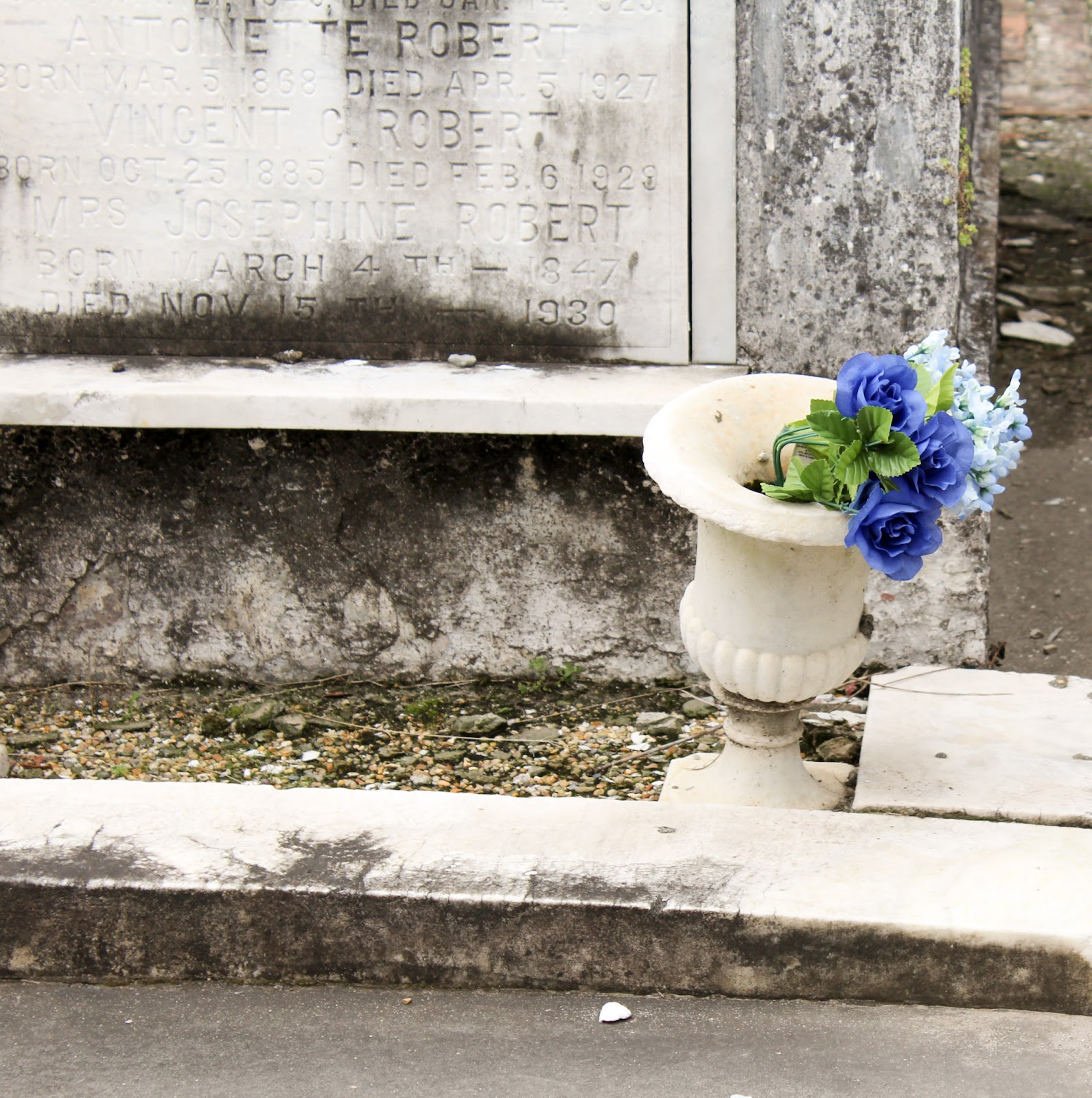
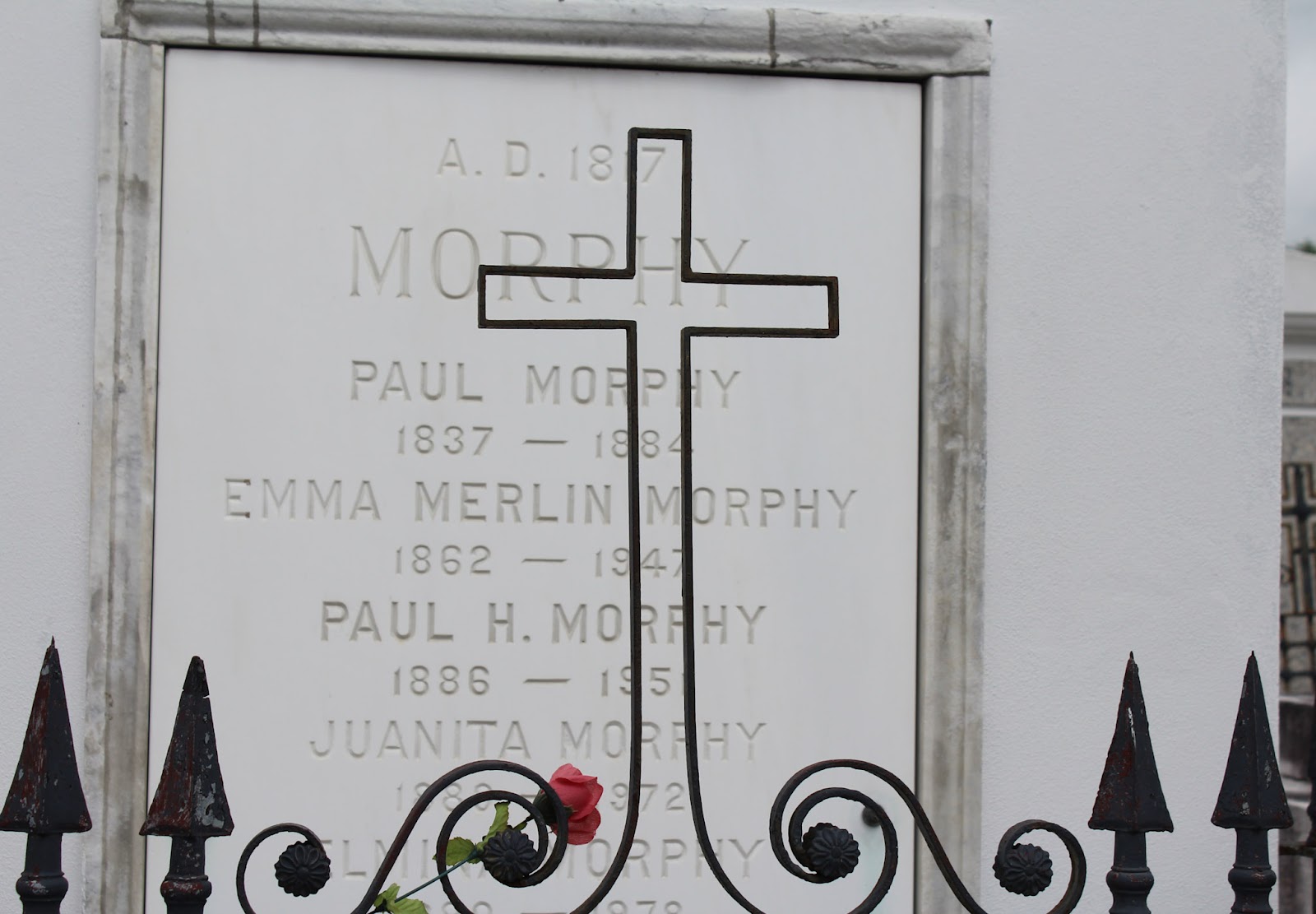
     Almost two years ago, I found myself in a famous cemetery in New Orleans, Louisiana. I was supposed to be taking pictures in a street photography course (and I did as evidenced below), but my mind began to wander as I considered the people buried in the famous cemetery.
33-IMG_0569.jpg 32-IMG_0568.jpg

Tombstones are fascinating to me, as they can tell a lot about a person by the names, the epitaph, and the dates they lived. Forgetting my task of photographing the cemetery entirely, I started to make up stories in my head about the people etched on the tombstones--because what else would an English teacher do in a cemetery? And I began to think about the fact that those two dates on the tombstone--the date of birth and death--are not really important. Rather, it’s the dash in between that matters. That small dash represents our life and all that we did, all that we said, all the people we impacted, those we hurt. What we choose to do with that dash is up to us.
     
This moment of how we live that dash reminds me of one of my students I taught. The biggest lesson this student has taught me is how to live that dash in moments of determination and resolution.

     At the end of the year, my students are required to deliver a ten minute literary presentation as part of their IB assessment. Oral presentations were not this student's idea of "fun" in my class. While we practiced throughout the year, I knew that he would not be comfortable in front of the class for ten minutes. I understood this discomfort because I despise public speaking, myself. As he stood at the podium, he somehow couldn't find the words to begin. I asked him to step outside, and I followed him into the hallway. He sat on the floor as tears welled in his eyes, telling me that he couldn't give his presentation. I quietly began to reaffirm the idea that he could, in fact, give this presentation, yet he wasn't buying in to what I was saying. Finally, I looked at him and got serious. "Do you know the secret to giving an oral presentation?" I asked him. This seemed a bit hypocritical considering my own fear of public speaking, but I knew I had to find a way to get him to give his presentation. He looked up at me. "You just have to know your first line," I said. "Do you know your first line?" The boy slowly nodded his head and uttered the first line of his presentation. "Good. Now I want you to say that line over and over again because if you can remember the first line, you can remember the next line and the line after that and the one after that. I promise you they'll come to you." I left him out in the hallway for a little longer to practice that first line. 

     When he was ready, he came into the classroom and stood behind the podium. Before he could utter his first line, there was a reaffirmation from someone on the side of the room, "You got this." Another came: "You can do it." I loved the spontaneous positive reinformcement his peers were giving him, but I feared he would forget his first line. But he didn't. He said that line and many more afterwards. The class gave him the biggest round of applause when he was finished. I sat at my desk, unable to grade the presentation because I had goosebumps. I had witnessed something so incredibly amazing--not only did I see kindness among my students, but I saw a student face his fear and succeed. I grabbed onto his arm as he rushed out the door. I've come to notice that everyone is always so slow to enter my room and so quick to leave, but I knew this student wasn't getting out of my classroom without me saying something. "I'm proud of you," I said. He looked at me and smiled. It was the biggest I had seen him smile that year. When this student unexpectedly passed away, his death paralyzed me and changed me as a teacher, and this story keeps coming back to the forefront of my mind as one that has made one of the largest impacts on me in my career.

      I don't usually tell stories about individual students in my blog, but I tell this story because I have learned so much about resolution from this one particular student. What does it mean to have resolution? I generally avoid dictionary definitions and suggest my students do the same in their own writing, but I would be remiss if I didn't define the word. According to Webster's Dictionary, resolution is "firmness of purpose; a mental state of determination." This student showed me and the other twenty something students in my classroom that day what it means to have resolution. He showed us what it means to be determined; he showed us what it means to live the dash.

     In a similar manner, I'm inspired by my current students who find ways of determination and resolution in living that dash. Senior TOK students, you have turned in your final drafts of your extended essay--an eighteen month research project. Congratulations! I have watched you from last January think of a unique topic, perform college-level research, and then write and rewrite. To say I am proud is an understatement.

Junior TOK students, you spent the day before break collecting clothes for Shepherd's Way Shelter and making no sew blankets. Your sense of giving and generosity is inspiring.


IB English juniors, you have shown me resolution as you prepare for your Individual Oral Commentary at the end of this month. You have gone from speaking for 49 seconds back in September to now delivering five to eight minute commentaries. I am in awe at your perseverance and determination to succeed.

So, as we begin 2018, I ask you to think about the dash in your life--those moments and what you choose to do with them. I ask you to think about how you can live a life of resolution. How can you show determination despite the fact that you are scared or don't really know how to make sense of your dash? In life, you can make a wish or you can make things happen. My resolution this new year is to make things happen, to live a life with resolution--with the kind of determintation and purpose that will make the dash in my life truly matter. What that means is I am committed to the things and people I believe in but also am committed to those things that scare me. It means I put down my phone or my book or my work and make time for others. It means when my son asks me to play Emoji Uno (yes, there is such a miserable game) for the ninteenth time, I play another round. It means that I start writing the book I have always wanted to write or try the lesson plan I had been afraid would not work. It means no matter what, I say yes to new experiences, new ideas. "No" cannot be an answer nor can "I can't" when I most certainly can.

Perhaps a year from now you will be listening to me sing in my band, the Parenthetical Dash. I will turn my monthly blog writing into the drafting of song lyrics. While I highly doubt this will be the case, this year I'm pursuing a life laced in resolution--and of course, a girl can always dream. Happy New Year, my students and readers!


Wednesday, December 6, 2017

College Edition: Just A Number

     I found myself reflecting on calculus recently when one of you told me that class was going to put a big dent in your GPA. Now me thinking about math is a scary thought, especially calculus. This was a class I took over two semesters in college because my professor thought that it would "better suit me to take it that way." Translation: You're not smart enough to handle it in one semester. Let's break it up over two. My response in hindsight: How lucky am I? For, calculus made an English major out of me, and helped me to appreciate every single paper I wrote in college. I simply was not made for derrivatives. And, quite frankly, derivatives were not made for me. Give me the trochaic rhythm of a poem or character archetypes or even a conjunctive adverb any day, though, and I felt right at home. But I digress. Simply put, calculus was my nemesis in college. It put a dent in my GPA. I worked for every single grade I earned those two semesters, went to extra help session upon extra help session, but the numbers still didn't work out--on my exams and in my GPA.

     Yet, I know now that it's just a number. My GPA--not a 4.0 for the first time in my life--was just a number. The score on most of my calculus exams--far lower than a highway speed limit--was just a number. And numbers don't define us. We matter far more than any test score. Let me repeat that: We matter more than any test score. At the time, I didn't realize this. I went home that first semester from college with my laundry, probably a few extra pounds because the dining hall at the University of Richmond was pretty good, a GPA that was lower than what I was used to, and a destroyed pride for not getting straight A's for the first time in my 13-year academic career.

     I remember telling my parents about college--about how I held my own in the poetry seminar I was enrolled in that semester where I was the lone freshman among upperclassmen. I remember telling them about the people I had met when just a few short months ago I had been dropped off in a place of 3000 students knowing not a soul. I remember telling them about the volunteer work I was doing in a program called Carver Promise. I went each week to Carver Elementary School in the City of Richmond and mentored a second grader named Rashad. Rashad is probably around 30 years old now, and I still have the letter he wrote Santa that year:

It took a long time for me to help him compose that letter, and it was, by far, the most gratifying thing I had done that semester at college. For the first time in a long time, I volunteered not because it would look good on a resume or application, not because my parents persuaded me it was a good idea, but because I wanted to volunteer. I wanted to make someone else's life better. And it felt good to be a part of this organization. I certainly was more than just a number.

     So, my first reaction when one of you was telling me about the hardships of calculus was that number doesn't define you. Ironically, the next day at school, we had a guest speaker in an assembly at Atlee who said the very same thing: "You are worth more than a test grade." I smiled at the thought. Here this 24 year-old probably was getting paid a far greater salary than I do to give advice to teenagers about their lives, and I (closer to twice this young man's age) gave someone the same advice for free. And again, I reminded myself, that I am not just a number. My salary does not define my self worth any more than my calculus score defined me. That semester, my calculus grade did not prevent me from anything in life except maybe sleep. Today, my salary does not prevent me from anything in life except maybe a trip to Hawaii and retirement in my near future. Yet, I'm okay with that because a number does not define me. I am not just a number.

       So, as you sit down to study for your exams after your first semester from college or if you're reading this and are a student who is more seasoned in taking college exams, or if you are one of my current students reading this who is stressed by the inordinate amount of work you have to do before break, please know that while grades are important, they are not everything. Numbers don't define who you are. After all, they're just numbers. Calculus is just numbers. And numbers can't be used to describe and define you, but words--words can. And so my choice to be an English teacher is finally validated twenty years later in that idea that numbers don't define us, but words most certainly do.

     Good luck on your upcoming exams! Congratulations on finishing your first semester at college. I know that you're busy, but please come back and visit me in Room 211. It's missed you...and so have I.